
The 7-Day Thai Challenge: Learn Thai Before Your Trip
Learn Thai in 7 days with this traveler's sprint. Daily goals, checkboxes, and 40 essential phrases to go from zero to confident before you land.
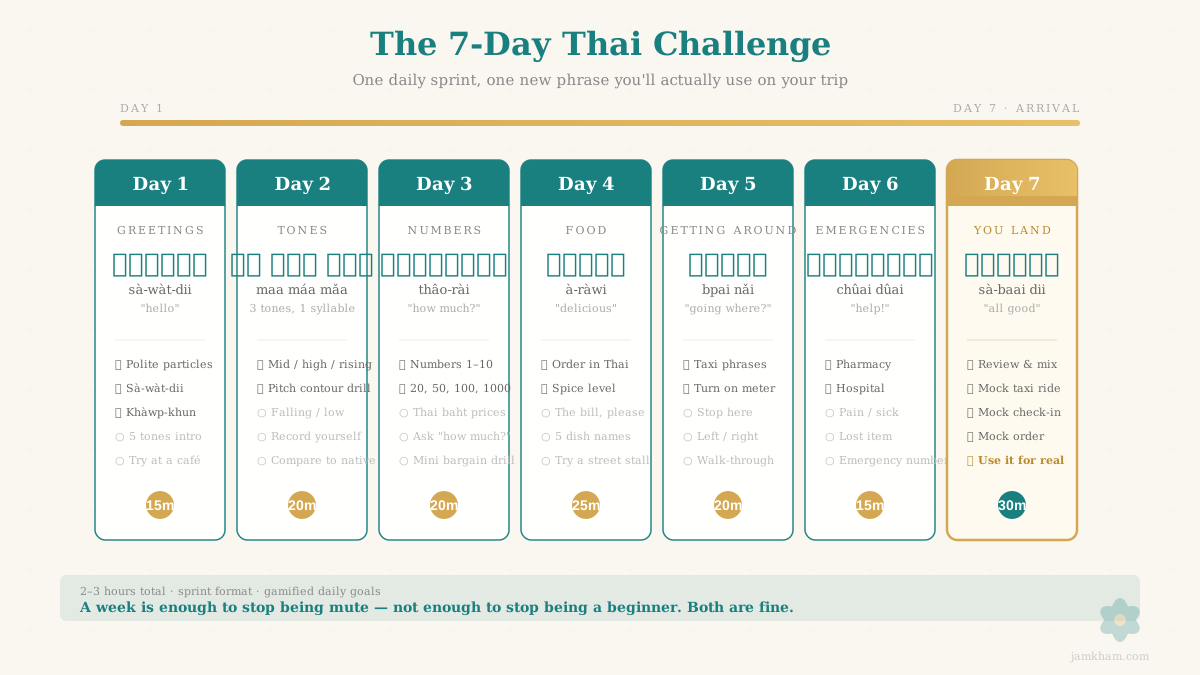
Your flight leaves in a week and you don’t speak a word of Thai. Can you actually learn Thai in 7 days? Not to fluency—nobody can, and anyone promising that is selling something. But you can go from zero to confidently functional: ordering food, paying the right price, finding the bathroom, and getting a genuine smile from a street vendor.
This is the 7-Day Thai Challenge. It’s a sprint built for last-minute travelers, deliberately different from our methodical 30-day beginner plan. That plan builds a foundation. This one gets you trip-ready fast. Each day has one theme, a short list of phrases, a checklist, and a field test. Twenty to thirty minutes a day—about the time you’d spend doomscrolling at the gate.
A quick reality check on what’s realistic. The U.S. Foreign Service Institute rates Thai as a Category IV language, needing roughly 1,100 hours for professional proficiency. But that’s a diplomat’s bar—reading newspapers and negotiating treaties. Tourist Thai is a different goal entirely, reachable in tens of hours, not thousands. Seven focused days won’t make you fluent, but they’ll make you useful. That’s the whole point.
Before You Start: Two Rules
Rule 1: Tones are not optional. Thai uses five tones, and they change meaning, not just emphasis. The classic example: ใกล้(glâi) (falling) versus ไกล(glai) (mid)—opposite meanings, same letters. You won’t master tones in a week, but you’ll train your ear to hear them, which is what keeps you from accidentally ordering the wrong thing.
Rule 2: Use audio, not just spelling. Romanization like the kind in this guide (with marks like aw, eu, oe and doubled long vowels) is a map, not the territory. Listen to each phrase said aloud and copy the melody. If the tone isn’t there, or it doesn’t sound natural, switch—for a tonal language that’s a wrong answer, not a rough edge.
Day 1: Sounds Polite, Says Hello
Today is about not sounding rude. Thai politeness runs on two tiny particles you’ll attach to almost everything: ครับ(khráp) if you’re male, ค่ะ(khâ) if you’re female. Tack one onto any phrase and you instantly sound courteous.
Your first four phrases:
- sà-wàt-dii khráp/khâสวัสดีครับ/ค่ะHello (polite)
- khàwp-khun khráp/khâขอบคุณครับ/ค่ะThank you
- khǎw-thôot khráp/khâขอโทษครับ/ค่ะExcuse me / Sorry
- khráp/khâครับ/ค่ะYes (polite)
That’s it. Four phrases, plus the ไหว้(wâi) gesture (palms together at chest height, slight bow). The wâi is reflexive in Thailand—return one when offered, and you’ve already shown more respect than most visitors.
Day 1 Checklist
- Say sà-wàt-dii smoothly, matching the audio rather than reading it letter by letter
- Attach khráp / khâ to every phrase automatically
- Practice the wâi in a mirror
- Field test: greet a family member in Thai and return their imaginary wâi
Day 2: Numbers and Money
You can’t shop, pay, or catch a taxi without numbers. Thai numbers are perfectly regular once you know one through ten. Eleven is just “ten-one,” twenty is “two-ten,” and so on.
- หนึ่ง(nèung), สอง(sǎwng), สาม(sǎam), สี่(sìi), ห้า(hâa)
- หก(hòk), เจ็ด(jèt), แปด(bpàet), เก้า(gâo), สิบ(sìp)
The one question that opens every market: an níi thâo ràiอันนี้เท่าไหร่How much is this one?. Prices come back in บาท(bàat), so ร้อยห้าสิบบาท(ráwy hâa sìp bàat) is 150. Learn to recognize the round numbers—twenty, fifty, one hundred (ร้อย(ráwy))—and you’ll catch most prices by ear. Local menus, markets, and lottery tickets sometimes print prices in Thai numerals (๑๒๓) instead of 1-2-3 — being able to read Thai script means you’re never squinting at a price you can’t parse.
Day 2 Checklist
- Count from nèung to sìp without looking
- Ask “an níi thâo rài?” out loud five times
- Recognize 50, 100, and 150 spoken aloud
- Field test: price three objects in your kitchen in Thai baht
Day 3: Eating Like You Belong
Food is where Thailand shines and where a few words transform the experience. The single most useful phrase you’ll learn all week is the spice control:
- mâi phètไม่เผ็ดnot spicy
- phèt nít nàwyเผ็ดนิดหน่อยa little spicy
Order with ขอ(khǎw)—it’s the magic word for requesting almost anything. khǎw náam nèung gâeo khrápขอน้ำหนึ่งแก้วครับWater, one glass, please follows a pattern you can swap endlessly: khǎw + thing + amount.
A few dishes to point at confidently: ผัดไทย(phàt thai), ข้าวผัด(khâao phàt), ข้าวมันไก่(khâao man gài). And when you pay: gèp dtang khráp/khâเก็บตังค์ครับ/ค่ะThe bill, please.
The phrase that makes vendors light up: à-râwy mâakอร่อยมากvery delicious. Say it after your first bite, with eye contact. Watch what happens.
Day 3 Checklist
- Order one dish using the khǎw pattern
- Specify your spice level (your stomach will thank you)
- Ask for the bill: gèp dtang
- Field test: order tonight’s dinner out loud in Thai before you eat it
Start reading Thai today
Day 2 already showed you the gap: Thai numerals on menus and prices that romanization won't help you read. Read Thai teaches the full alphabet in the order you'll actually meet it — characters, tones, and script together. First three modules free — no card.
Start the reading course →First 3 modules free — no card, and they don't expire.
Day 4: Getting Around
Day 4 is navigation—the difference between a relaxed trip and standing on a curb pointing at your phone. Start with the universal traveler’s question:
- hâwng-náam yùu thîi nǎi khráp/khâห้องน้ำอยู่ที่ไหนครับ/ค่ะWhere is the bathroom?
- ...yùu thîi nǎi khráp/khâ...อยู่ที่ไหนครับ/ค่ะWhere is...?
That second one is a template. Drop any place name in front of อยู่ที่ไหน(yùu thîi nǎi) and you can ask for the BTS station, the hotel, the pier—anything.
For taxis and tuk-tuks:
- bpai... khráp/khâไป...ครับ/ค่ะGo to... please
- jàwt dtrong-níi khráp/khâจอดตรงนี้ครับ/ค่ะStop here
- ตรงไป(dtrong bpai), เลี้ยวซ้าย(líao sáai), เลี้ยวขวา(líao khwǎa)
In Bangkok traffic you’ll hear รถติด(rót dtìt) a lot. Knowing the word won’t move the cars, but at least you’ll know why you’re not moving.
Day 4 Checklist
- Ask “where is the bathroom?” without hesitation
- Use the “…yùu thîi nǎi?” template with three different places
- Direct a taxi: bpai, dtrong bpai, jàwt dtrong-níi
- Field test: navigate someone to your kitchen using only Thai directions
Day 5: Markets and Bargaining
Markets run on warmth, not aggression. Bargaining in Thailand is a smiling negotiation, and a little Thai earns you the local price instead of the ราคาฝรั่ง(raa-khaa fà-ràng).
- lót nàwy dâi mái khráp/khâลดหน่อยได้ไหมครับ/ค่ะCan you reduce a little?
- แพงไป(phaeng bpai)
- lawng dâi mái khráp/khâลองได้ไหมครับ/ค่ะCan I try it?
The bundling trick works everywhere: séu sǎwng an lót dâi máiซื้อสองอัน ลดได้ไหมBuy two, can you discount?. Keep it light. Smile, never push hard over small change, and walk away politely if the price won’t budge—often it suddenly will.
Day 5 Checklist
- Ask for a discount with a smile: lót nàwy dâi mái
- Use the “buy two” bundling line
- Know where bargaining is and isn’t appropriate
- Field test: haggle a “vendor” (friend or mirror) down from 200 to 150 baht
Day 6: Small Talk and Connection
Today you graduate from transactions to connection—the phrases that turn a vendor’s nod into a conversation. Thai people rarely expect foreigners to try, so even a clumsy attempt is met with delight.
- sà-baai dii mǎiสบายดีไหมHow are you? — answer: สบายดี(sà-baai dii)
- chêu à-rai khráp/kháชื่ออะไรครับ/คะWhat's your name?
- châwp meuang thaiชอบเมืองไทยI like Thailand
When you’re lost in a conversation, two honesty phrases save you:
- mâi khâo jai khráp/khâไม่เข้าใจครับ/ค่ะI don't understand
- phûut cháa cháa dâi máiพูดช้าๆได้ไหมCan you speak slowly?
And the phrase Thais love hearing from a learner: when someone says your Thai is good, you can deflect modestly or just beam and say ขอบคุณครับ/ค่ะ(khàwp-khun khráp/khâ). For more of these relationship-builders, the Thai heart-words built around ใจ(jai) are pure gold.
Day 6 Checklist
- Ask and answer “sà-baai dii mǎi?”
- Exchange names in Thai
- Deploy “mâi khâo jai” instead of freezing up
- Field test: hold a 30-second all-Thai mini-conversation with anyone willing
Day 7: Review, Field-Test, Pack
No new vocabulary today. Day 7 is consolidation—the day that decides whether this all sticks. Cognitive science is clear that retrieval (pulling words from memory) beats review (re-reading them). So close the guide and test yourself.
Run a “day in Thailand” simulation in your head: you land, greet the driver, give directions, check in, find dinner, specify spice, pay, compliment the cook, ask the way to the night market, and bargain for a souvenir. Every gap you hit is exactly what to drill one more time.
This is also where a spaced-repetition app earns its keep on the plane and during your trip—five minutes of review the morning of each day keeps your 40 phrases warm. Wondering whether tones will trip you up in real conversations? Our honest take on whether Thai is hard for travelers sets expectations without the scaremongering.
Day 7 Checklist
- Run the full “day in Thailand” simulation from memory
- Re-drill only the phrases you blanked on
- Load your phrases into an app for in-trip review
- Field test: teach all seven days’ phrases to a travel companion
What You Can Realistically Expect
After seven focused days you’ll have roughly 40 phrases, the five tones in your ear (not yet perfect on your tongue), and—more important—the confidence to try. You won’t understand rapid replies. You’ll mangle a tone and get a giggle. That’s fine. The goal was never fluency; it was to be functional and warm, and to show that you cared enough to learn.
That last part matters more than grammar. A foreigner who says อร่อยมาก(à-râwy mâak) to a street cook with a real smile gets a response no phrasebook can capture. Seven days buys you that.
If you catch the bug—and many travelers do—the natural next step is the structured 30-day beginner plan, which turns these essential phrases into an actual foundation.
Frequently Asked Questions
Can you really learn Thai in 7 days?
You can’t become fluent in 7 days, but you can learn enough essential Thai to greet people, order food, pay, bargain, and navigate with confidence. This challenge focuses on about 40 high-frequency phrases and basic tone recognition—realistic for a week of 20–30 minute daily sessions. Fluency takes far longer; functional tourist Thai does not.
How many Thai phrases do I need for a trip?
Most travelers do well with 30–50 phrases covering greetings, numbers, ordering food, directions, bathrooms, and bargaining. Quality beats quantity: 40 phrases drilled until automatic are far more useful than 200 you half-remember. This 7-day challenge is built around that core set.
Do I need to learn Thai tones for a short trip?
You don’t need to master all five tones in a week, but training your ear to hear them prevents embarrassing mix-ups, since tones change word meaning in Thai. Focus on listening to a Thai speaker and copying the melody of each phrase rather than perfecting tone production. Context will cover most of your mistakes as a tourist.
Is Thai hard to learn for English speakers?
Thai is rated Category IV by the U.S. Foreign Service Institute—challenging mainly because of its tones and unique script. But tourist-level speaking is reachable in tens of hours, not the 1,100 hours needed for professional proficiency. For a short trip, the difficulty is very manageable. See our guide on whether Thai is hard for travelers for a fuller picture.
What should I learn first if I only have a few days?
Start with politeness particles (khráp / khâ), then greetings, numbers, and food ordering—in that order. Those cover the interactions you’ll have most often. Navigation and bargaining come next. This challenge sequences them day by day so you build confidence before adding complexity.
Ready for Your Trip?
You’ve got seven days and a clear plan. The missing piece is hearing each phrase the way a Thai speaker actually says it—because in a tonal language, the melody is the word.
Our traveler track gives you these exact essential phrases with clear Thai audio and tone training built into every card, at natural and slow speed in the paid packs. Speak Thai is coming soon — join the waitlist for founding pricing. Set your trip date and we’ll pace the phrases so you land ready to say สวัสดีครับ/ค่ะ(sà-wàt-dii khráp/khâ) like you mean it.
Related reading: Thai for Beginners: 30-Day Plan | How Long to Learn Thai for Travel | Is Thai Hard to Learn for Travelers?
Start reading Thai today
Make reading part of the challenge, not something you tackle after the trip — the Thai alphabet takes far less time than you think, and being able to read menus, signs, and prices removes a real gap in your seven days. First three modules free — no card.
Start the reading course →First 3 modules free — no card, and they don't expire.