
Interleaved Practice: Learn 43% More Thai
Interleaved practice improves retention by 43% vs blocked study. Why mixing Thai vocabulary -- though harder -- builds knowledge that lasts.
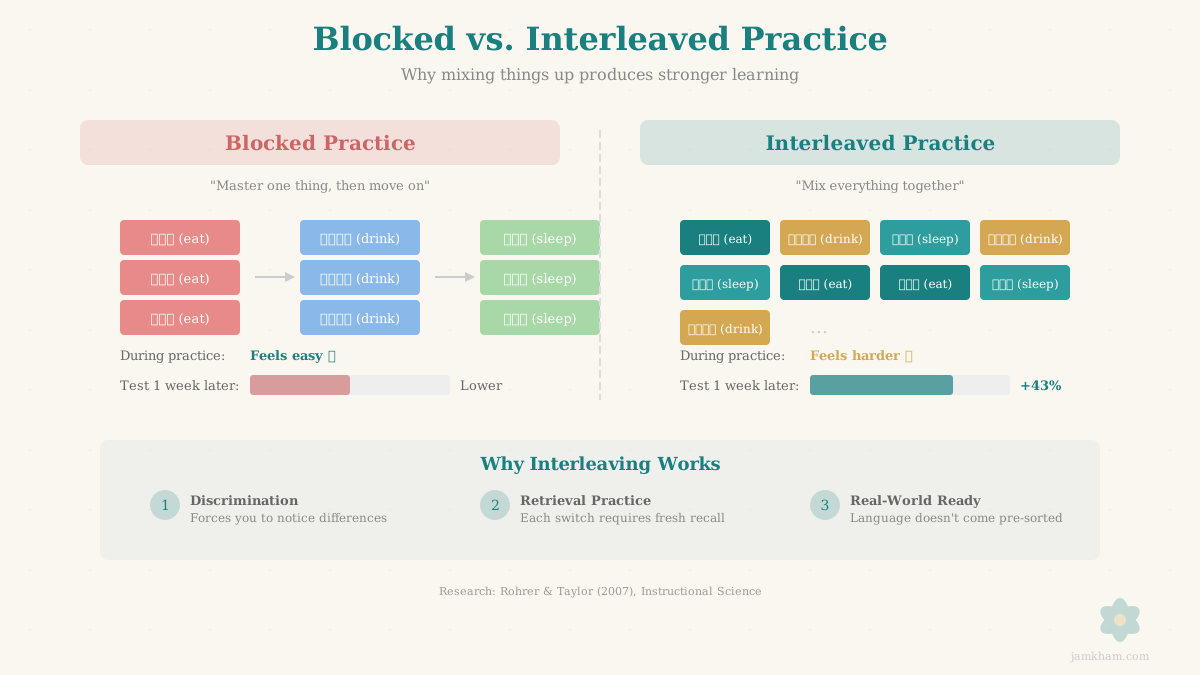
The intuitive way to learn feels obvious: master one thing, then move to the next. Study all your food vocabulary until it’s solid, then tackle transportation words. Drill the mid-tone words, then the falling-tone words.
This approach has a name—blocked practice—and it’s how most people study. It’s also significantly less effective than the alternative.
Blocked vs. Interleaved Practice
Blocked practice groups similar items together. You might study:
- กิน (gin), กิน, กิน — to eat
- ดื่ม (dʉ̀ʉm), ดื่ม, ดื่ม — to drink
- นอน (nɔɔn), นอน, นอน — to sleep
Interleaved practice mixes them:
- กิน, ดื่ม, นอน, กิน, ดื่ม, นอน…
Blocked practice feels better. After several repetitions of กิน, you can produce it effortlessly. You feel like you’re learning.
Interleaved practice feels worse. Each switch requires mental effort. You might confuse กิน and ดื่ม for a moment. Progress seems slower.
The research tells a different story: that feeling of difficulty isn’t failure. It’s learning.
The Research
In 2007, Doug Rohrer and Kelli Taylor conducted an elegant study with college students learning to calculate the volumes of geometric shapes. Half the students practiced in blocked fashion (all spheres, then all cones, then all wedges). Half practiced interleaved (shapes mixed randomly).
During practice, the blocked group performed better. They were faster, more accurate, more confident.
On the test one week later, the interleaved group scored 43 percentage points higher.
This finding has been replicated across domains: math problems, bird species identification, painting styles, motor skills, and—critically for language learners—vocabulary acquisition. The pattern is consistent: interleaved practice feels harder during training but produces superior performance on delayed tests.
Robert and Elizabeth Bjork, psychologists who’ve spent decades studying learning, call this a “desirable difficulty.” The extra effort required during interleaved practice isn’t wasted—it’s building the kind of memory that survives real-world conditions.
Why Interleaving Works
Several mechanisms explain the interleaving advantage:
Discrimination learning. When you study กิน repeatedly, you don’t have to distinguish it from anything. When กิน, ดื่ม, and นอน are mixed together, you must notice what makes each one different. This discrimination is exactly what you need when encountering these words in real Thai.
Retrieval practice. Each switch forces you to retrieve information anew. In blocked practice, the answer is already activated in working memory. In interleaved practice, you must pull it from long-term storage each time. As testing effect research shows, this retrieval is what strengthens memory.
Strategy selection. Real-world language use doesn’t come pre-sorted. You don’t know in advance whether the next word you need will be a food word or a transportation word. Interleaved practice trains you to identify what kind of problem you’re facing and select the right approach—a skill blocked practice never develops.
Preventing false fluency. Blocked practice creates an illusion of mastery. You can produce กิน easily—but only because you just saw it three times. Remove that context, wait a few days, and the ease evaporates. Interleaving prevents this illusion by never letting you coast on recency.
Practical Application for Languages
For vocabulary learning, interleaving means mixing:
Across lessons. Don’t just drill this week’s words. Mix in vocabulary from previous weeks.
Across difficulty levels. Combine words you know well with words you’re still learning. The easy words provide retrieval practice; the hard words get the attention they need.
Across word types. Mix nouns, verbs, and classifiers. Mix different tones. Mix formal and informal registers.
Across card formats. Alternate between recognition cards, production cards, listening cards, and cloze cards. Each format requires different retrieval, preventing the false fluency that comes from repetitive practice.
This is why Jam Kham shuffles vocabulary rather than grouping it by lesson or category. Each study session mixes items from across your learning history, at varying difficulty levels, through different card types. The algorithm handles the complexity of interleaving so you can focus on recall.
The experience may feel less smooth than drilling one lesson at a time. That’s by design. The friction of switching contexts, of pausing to identify which word you’re looking at before recalling what it means—that’s where the real learning happens.
The Takeaway
Blocked practice feels productive. You finish a session having drilled กิน twenty times, and you can produce it instantly. That feels like progress.
But the test isn’t whether you can say กิน right after practicing it. The test is whether you can say it next week, in a restaurant, when you’re also thinking about the menu and the waiter and the fact that you haven’t spoken Thai in three days.
Interleaved practice prepares you for that moment. The confusion you feel when กิน and ดื่ม are mixed together—that’s your brain learning to tell them apart. The effort of switching contexts—that’s retrieval practice happening automatically. The slower pace—that’s the price of learning that actually transfers.
Trust the friction.
Jam Kham interleaves automatically—mixing lessons, difficulty levels, and card types so you don’t have to manage it yourself. Try it free.
Related reading:
- Why Spaced Repetition Works—the science of timing your reviews
- The Testing Effect—why quizzing yourself beats re-reading