
Sick in Thailand? Emergency Phrases That Help
Emergency numbers, hospital systems, pharmacy culture, and the Thai phrases that get you medical help — from a headache to something serious.
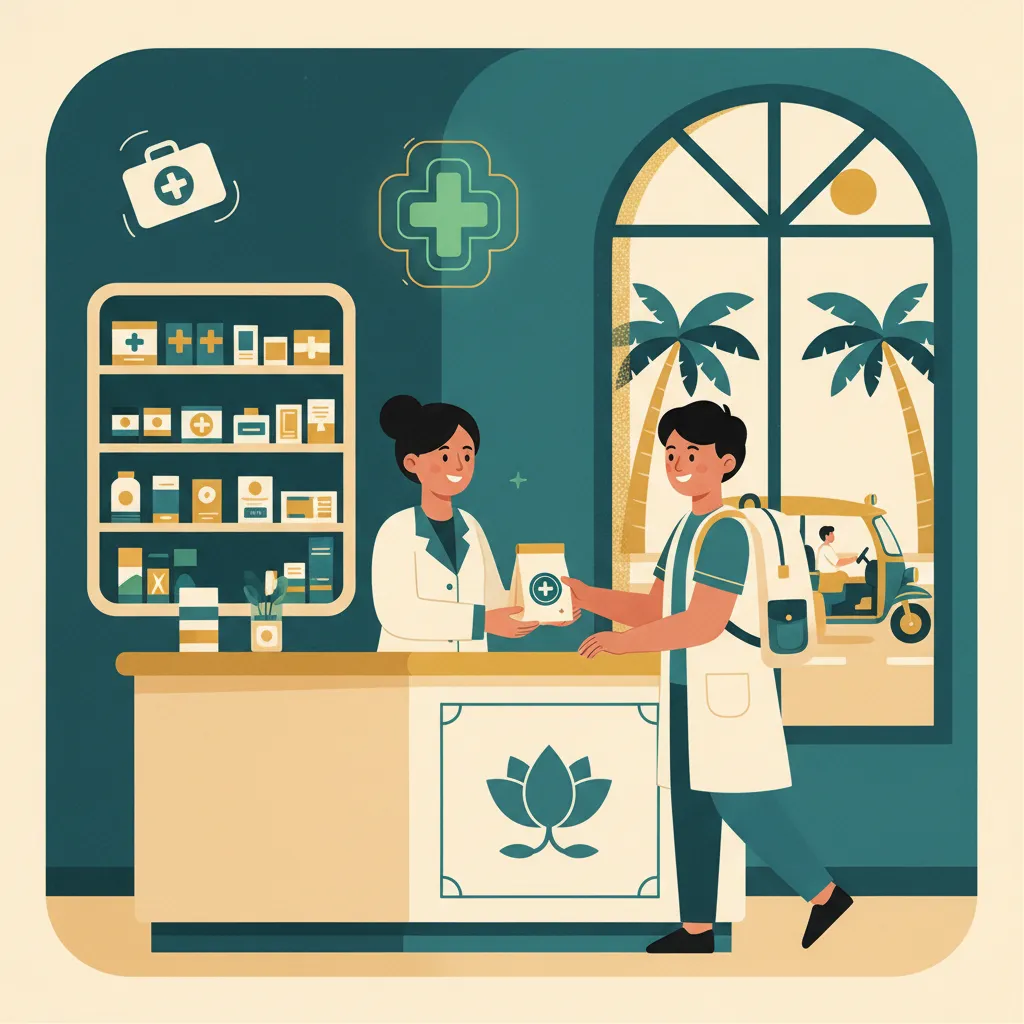
Nobody plans to get sick on a trip. But between motorbike accidents, food poisoning, heat that can drop you, and dengue mosquitoes, Thailand presents more health risks than most travelers expect. The good news: Thailand’s medical system is genuinely excellent, especially at the private hospital level. The gap is language. When your stomach has turned inside out at 2 AM or you’ve come off a scooter on a Chiang Mai backroad, you need specific words and specific numbers — not a translation app and a prayer.
This is not a medical guide. It is a language-and-systems guide: the numbers to call, how hospitals work, what pharmacies can do for you, and the Thai phrases that get you from “I feel terrible” to “I’m getting treatment.”
The Three Numbers That Matter
Memorize these. Screenshot them. Write them on the inside of your phone case. When something goes wrong, these are the numbers that get help moving.
1669 — National Emergency Medical Service
Thailand’s emergency medical hotline, coordinated by the National Institute of Emergency Medicine (NIEM, สพฉ.). Dispatchers speak limited English, but they can send an ambulance based on your location. In Bangkok and major cities, response time averages around 10 minutes. In rural areas, expect up to 30 minutes or longer. GPS location sharing through your phone is the fastest way to communicate where you are if you cannot describe it in Thai.
191 — Police
The general police emergency number. Useful for accidents, assaults, and situations where you need an official report (which you will need for insurance claims). English ability varies widely — in Bangkok, you may get an English speaker. In smaller cities, probably not.
1155 — Tourist Police
This is your best bet when you need English. The tourist police hotline is specifically staffed with English-speaking officers and operates 24 hours. They handle crimes against tourists, scams, and can help coordinate with hospitals and regular police. If you are in a medical emergency and struggling to communicate, calling 1155 and asking them to help you reach 1669 is a legitimate strategy.
Private vs Public Hospitals
Thailand’s hospital system is split between private and public, and the difference matters enormously for foreign travelers.
Private Hospitals
This is where most travelers end up, and for good reason. Thailand has 66 JCI-accredited hospitals — more than any other country in Southeast Asia, and fourth-most globally. JCI accreditation is the same standard applied to top US and European hospitals.
Names you will see: Bumrungrad International (Bangkok), Bangkok Hospital (chain with locations in most major cities), Samitivej, BNH, Phuket International. These hospitals have international patient departments with staff who speak English, Japanese, Arabic, Chinese, and often more. They accept international insurance, take credit cards, and have interpreters on call.
A consultation at a private hospital runs 1,500-3,000 THB ($40-85 USD). More with tests and treatment. This is expensive by Thai standards but cheap by Western standards. If you have travel insurance, it is typically covered entirely.
The trade-off: private hospitals are concentrated in Bangkok, Chiang Mai, Phuket, Pattaya, and Koh Samui. If you are on a smaller island or in a rural area, the nearest private hospital may be hours away.
Public Hospitals
Public hospitals charge 300-1,000 THB for a consultation. The medical care is often excellent — many Thai doctors trained internationally. But public hospitals are crowded, waits are long (3-6 hours is common), and English-speaking staff are rare outside Bangkok’s major public hospitals like Siriraj or Ramathibodi.
If you go to a public hospital, bringing a Thai-speaking friend makes an enormous difference. If you do not have one, the phrases later in this guide become critical.
Pharmacy Culture: Your First Stop for Most Problems
Here is something that surprises most Western travelers: Thai pharmacies sell many drugs over the counter that require prescriptions in the US, UK, Australia, and Europe. Antibiotics, antimalarials, strong painkillers, birth control, and muscle relaxants — a Thai pharmacist can sell you these directly and will often recommend specific treatments.
ráan khǎai yaaร้านขายยาpharmacyThai pharmacists are trained to diagnose and treat common conditions. For a headache, stomach bug, minor infection, allergic reaction, or skin rash, the pharmacy is where most Thais go first — not the hospital. This is normal, expected, and usually effective.
Walk in, describe your symptoms (pointing at the affected area works), and the pharmacist will recommend medication and dosages. Many pharmacists in tourist areas speak functional English. In less touristy areas, the medical Thai phrases below become essential.
Look for the green cross sign or the Thai script ร้านขายยา(ráan khǎai yaa) on the storefront. Pharmacies are everywhere — Bangkok alone has thousands. They are in every mall, on most major streets, and near every hospital.
Essential Medical Thai Phrases
These seven phrases and vocabulary items cover the vast majority of medical situations a traveler encounters. You do not need to speak Thai fluently. You need these specific words, clearly enough that a Thai speaker can understand you.
Medical Thai Quick Reference
| Thai | Romanization | Meaning |
|---|---|---|
| ไม่สบาย | mâi sà-baai | I’m not well / I’m sick |
| ปวดหัว | pùat hǔa | headache |
| ปวดท้อง | pùat thɔ̂ɔng | stomachache |
| แพ้ยา | phâe yaa | allergic to medicine |
| ร้านขายยา | ráan khǎai yaa | pharmacy |
| โรงพยาบาล | roong phá-yaa-baan | hospital |
| ช่วยด้วย | chûai dûai | help! |
| เรียกรถพยาบาล | rîak rót phá-yaa-baan | call an ambulance |
Saying “I’m Not Well”
mâi sà-baaiไม่สบายI'm not well / I'm sickThis is the single most useful medical phrase. ไม่สบาย(mâi sà-baai) literally means “not comfortable” and covers everything from a mild headache to a serious illness. Say it to a pharmacist, a hotel receptionist, a taxi driver, or anyone you need help from. It immediately communicates that you have a health problem and need assistance.
Describing Pain
pùatปวดpain / acheปวด(pùat) is your pain word. Combine it with a body part and you have a specific complaint:
- ปวดหัว(pùat hǔa) — headache
- ปวดท้อง(pùat thɔ̂ɔng) — stomachache
- ปวดฟัน(pùat fan) — toothache
- ปวดหลัง(pùat lǎng) — backache
If you cannot remember the body part word, say ปวดตรงนี้(pùat dtrong níi) and point. This works in any medical setting.
Allergies
phâeแพ้allergic toCritical if you have drug or food allergies. แพ้ยา(phâe yaa) tells a pharmacist or doctor you have a medication allergy. Follow it with the drug name if you know it. For food allergies: แพ้อาหาร(phâe aa-hǎan).
Common specific allergies:
- แพ้ถั่ว(phâe thùa) — peanut allergy
- แพ้อาหารทะเล(phâe aa-hǎan thá-lee) — seafood allergy
- แพ้เพนนิซิลิน(phâe phen-ní-sí-lin) — penicillin allergy
Getting to Help
roong phá-yaa-baanโรงพยาบาลhospital rîak rót phá-yaa-baanเรียกรถพยาบาลcall an ambulance chûai dûaiช่วยด้วยhelp!ช่วยด้วย(chûai dûai) is the phrase that gets bystanders moving. It is loud, clear, and universally understood. เรียกรถพยาบาล(rîak rót phá-yaa-baan) is more specific — use it when you need someone to make the call for you.
For a taxi to the hospital: ไปโรงพยาบาล(bpai roong phá-yaa-baan). Every taxi driver knows this phrase. Say it with urgency and they will prioritize getting you there.
Common Tourist Health Issues
Thailand is not unusually dangerous, but it presents specific health risks that catch travelers off guard. Knowing what’s common helps you prepare and respond.
Motorbike Accidents
This is the number one insurance claim for travelers in Thailand, and it’s not close. Thailand’s motorcycle fatality rate is among the highest in the world — 74-83% of traffic deaths involve motorcycles. Most tourists who rent scooters have no motorcycle license, limited experience riding, and are dealing with unfamiliar roads on the left side.
Here’s the critical insurance detail: most travel insurance policies do not cover motorbike accidents unless you hold a valid International Driving Permit (IDP) or Thai license with a motorcycle endorsement. A regular car license does not count. If you crash without valid motorcycle credentials, you may be paying for your own treatment — and a helicopter evacuation from a rural area can cost $20,000-50,000 USD.
If you ride: wear a helmet (it’s the law and it saves lives), get an IDP before you leave home, stick to automatic scooters if you’ve never ridden manual, and avoid riding at night. The roads are not the problem. The other drivers, the dogs, the unexpected gravel patches, and the local driving customs are the problem.
Food Poisoning
Thailand reports over one million diarrheal illness cases per year and more than 120,000 food poisoning cases. This is not a reflection of poor food safety — street food is almost always cooked fresh at high heat, which kills bacteria effectively. The risk comes from water, ice, raw salads, shellfish, and dishes that have been sitting out.
For mild food poisoning (and you will likely experience at least one bout), the pharmacy is your best friend. Oral rehydration salts (เกลือแร่(glʉa râe)), anti-diarrheal medication, and electrolyte drinks are available at every pharmacy and 7-Eleven. If symptoms persist beyond 48 hours, include blood, or come with a high fever, go to a hospital.
Heat Exhaustion and Heatstroke
Thailand recorded 61 heatstroke deaths in the first five months of 2024 alone. April heat index readings regularly hit 42-52°C (108-126°F). Even outside of April, temperatures in the 33-37°C range with high humidity create genuine risk if you are walking long distances, dehydrated, or not acclimatized.
Symptoms of heat exhaustion: heavy sweating, cold and clammy skin, fast weak pulse, nausea, dizziness. Symptoms of heatstroke (medical emergency): body temperature above 40°C, hot red dry skin, rapid strong pulse, confusion, loss of consciousness. If someone shows heatstroke signs, call 1669 immediately and cool them down with whatever you have.
Drink more water than you think you need. Carry it. The air-conditioned interiors of malls and BTS stations are not just convenient — they are temperature regulation tools. Duck in when you feel overheated.
Dengue Fever
Dengue cases surged 123% in Thailand in 2024, with peak transmission from May through October during the rainy season. There is no specific treatment for dengue — only symptom management. Prevention means avoiding mosquito bites: repellent with DEET, long sleeves at dusk and dawn, and air-conditioned or screened sleeping areas.
If you develop sudden high fever, severe headache behind the eyes, joint and muscle pain, and a rash 3-7 days after mosquito exposure, get to a hospital. Dengue can become serious fast, and a blood test confirms it.
Dog Bites and Rabies
Thailand has a significant stray dog population. Data shows 46.3% of animal bite injuries come from dogs, and 14.7% of travelers bitten report it happening within their first week in the country — before they have calibrated their awareness. Rabies is present in Thailand and is fatal once symptoms appear.
If bitten: wash the wound immediately with soap and water for 15 minutes. Then go to a hospital for post-exposure prophylaxis (PEP). Do not wait. Do not assume the dog was fine because it looked healthy. PEP is widely available at Thai hospitals and is effective when started promptly. If you are heading to rural areas or plan to spend time around animals, consider pre-exposure rabies vaccination before your trip — it simplifies post-bite treatment significantly.
Travel Insurance Is Not Optional
Thailand does not require travelers to carry health insurance. You should carry it anyway. Here is why the math works:
A comprehensive travel insurance policy costs roughly $1.50-5.00 USD per day, depending on your age and coverage level. A single night in a Thai private hospital can run $500-2,000. A serious accident requiring surgery and a week of hospitalization: $10,000-50,000. Medical evacuation to your home country: $50,000-100,000+.
Minimum recommended coverage: $100,000 USD for medical expenses, including emergency evacuation.
Read the policy details before you buy. The two most common gaps:
- Motorbike exclusion — As noted above, most policies exclude motorcycle accidents without a valid IDP or Thai license. Some policies exclude motorcycles entirely. Check.
- Pre-existing conditions — Many policies exclude treatment related to pre-existing medical conditions unless you purchased a specific rider. If you have a chronic condition, confirm coverage explicitly.
Keep your policy number and the insurer’s 24-hour assistance hotline in your phone. When you arrive at a hospital, the first question after your symptoms will be about insurance. Having the details ready speeds everything up.
The Point-and-Translate Backup
Translation apps have a role in medical situations, but it is a supporting role, not the lead. At a hospital with an international department, the staff already speak English and do not need your phone. At a pharmacy or public hospital where English is limited, a translation app can help with specific medical terms that go beyond the basic phrases.
The problem: medical Thai is technical, tonal, and context-dependent. Google Translate handles it poorly — we’ve written about why. A mistranslated allergy or symptom description is worse than no translation at all.
When to use translation apps:
- Showing your medication list to a pharmacist (photo of your prescriptions works better than typing)
- Confirming specific medical terms after you have already communicated the basics in Thai
- As a last resort when no other communication method is working
When to rely on memorized phrases:
- Initial contact — telling someone you are sick and need help
- Communicating urgency — ช่วยด้วย(chûai dûai) and เรียกรถพยาบาล(rîak rót phá-yaa-baan) need to come out instantly
- Describing pain and allergies — the basic vocabulary is faster and more reliable than an app
- Any situation where your hands are not free or your phone is damaged
The strongest position: know the core phrases from memory, carry a written allergy card in Thai, and keep a translation app as your backup layer.
Prepare Before You Need It
The worst time to learn medical vocabulary is when you are already sick. These phrases are not complex — seven core terms cover most situations. But they need to be in your memory, spoken with enough clarity that a Thai listener understands you, and accessible without reaching for your phone.
Practice them. Say them out loud. Get the tones close enough that they work. Jam Kham’s free essentials include medical and emergency phrases with native audio at natural and slow speeds — start there and build the phrases into your preparation alongside sunscreen and a power adapter.
Thailand’s medical system will take care of you. The language is what gets you connected to it.
Related reading: Thai Medical Vocabulary: Body Parts and Symptoms | น้ำใจ at the Hospital: How Thai Culture Shapes Healthcare | Bangkok Language Survival Guide | Google Translate’s Thai Problem