
Thai for Digital Nomads: Beyond Tourist Basics
Tourist Thai covers week one. Staying months? The daily vocabulary, social phrases, and bureaucratic Thai that change your quality of life in Thailand.
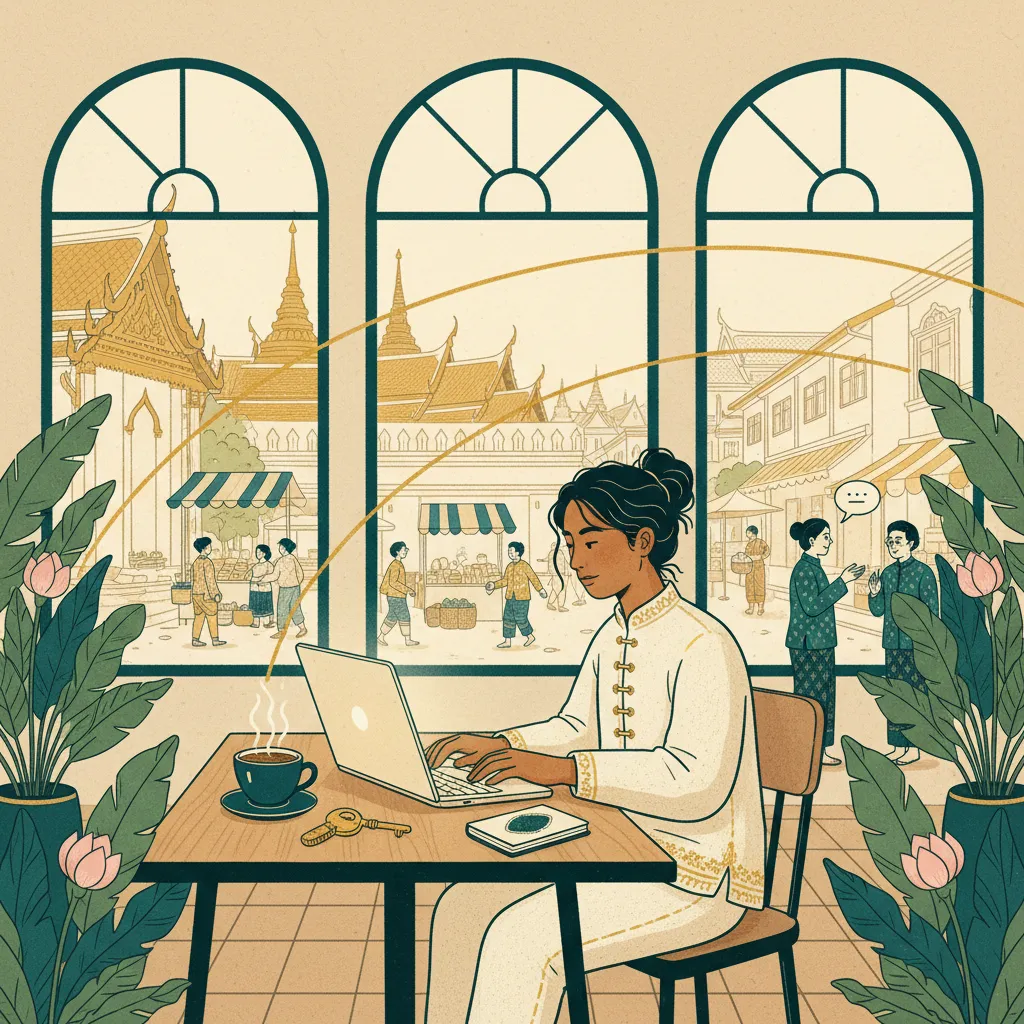
You’ve been in Chiang Mai for two weeks. You can say hello, thank you, order pad thai, and tell a taxi driver where you’re going. The tourist phrases worked. They got smiles, nods, the right food delivered to your table.
But now you’re buying coffee from the same woman every morning. You’re eating at the same noodle stall three times a week. The security guard at your condo waves at you daily. And “sawadee khrap” followed by pointing at a menu is starting to feel hollow—for both of you.
This is the digital nomad language gap. You live here. You eat here daily. You interact with the same people in the same places. But your Thai is stuck at tourist level, and the gap between your actual life and your language ability grows wider every week.
You’re not going to commit to a two-year language program. You don’t need to. What you need is the specific vocabulary that covers your actual daily routine—the phrases tourist guides don’t include because tourists don’t need them.
You’re Not a Tourist Anymore (But You’re Not a Student Either)
The nomad sits in a strange linguistic space. You’re past the one-week tourist stage but nowhere near the committed expat who takes formal classes. Your Thai needs to cover a specific set of recurring situations: the cafe, the coworking space, the gym, the landlord, the laundry drop-off, the immigration office, the friend group that mixes Thai and English.
Most language resources don’t serve this middle ground. Tourist phrasebooks stop at “where is the bathroom?” Language courses assume you want to read newspapers eventually. Neither matches the nomad reality: you want functional Thai for daily quality of life, learned in 10-15 minute sessions between Zoom calls.
(For why translation apps aren’t enough for daily life in Thailand, see why Google Translate fails for Thai.)
The window matters. Months one through three are where basic Thai delivers the highest return on time invested. After month three, you’ve either built a foundation that grows through daily use, or you’ve settled into an English-language bubble that becomes harder to break out of.
For a structured starting point, our 30-day Thai plan for beginners covers the foundation. This guide picks up where tourist phrases leave off.
The Daily Phrases Tourist Guides Don’t Cover
Your routine generates the same interactions repeatedly. Getting the right phrases for these situations means you’ll practice them naturally—every single day—without dedicated study time.
The Cafe Order
You’re going to order coffee roughly 200 times during a three-month stay. Get it right once, and muscle memory handles the rest.
ao a-meh-ri-kaa-nôo rɔ́ɔn khráp/kháเอาอเมริกาโน่ร้อนครับ/ค่ะI'll have a hot americano, pleaseThai people mix English loanwords into sentences naturally. “Americano” stays English. “Latte” stays English. The structure around them is Thai: เอา(ao) at the start, the polite particle at the end.
Daily Cafe Vocabulary
| Thai | Romanization | Meaning |
|---|---|---|
| เอา…ครับ/ค่ะ | ao…khráp/khá | I’ll have… |
| ร้อน | rɔ́ɔn | hot |
| เย็น | yen | iced |
| หวานน้อย | wǎan nɔ́ɔi | less sweet |
| ไม่ใส่น้ำตาล | mâi sài nám-dtaan | no sugar |
| ใส่ถุง | sài thǔng | put in a bag (takeaway) |
| ทานที่ร้าน | thaan thîi ráan | eat/drink here |
| เท่าไหร่ | thâo-rài | how much? |
Note: “Less sweet” (wǎan nɔ́ɔi) is one of the most useful modifiers you’ll learn. Thai drinks default to very sweet by Western standards.
Internet and Coworking
The digital nomad priority question:
in-thəə-nét rew máiอินเทอร์เน็ตเร็วไหมIs the internet fast?Again, the English loanword stays English. Thai supplies the grammar. Three more you’ll use constantly:
wai-fai chái dâi máiไวไฟใช้ได้ไหมDoes the WiFi work?Ask this before you sit down. If the answer is ใช้ได้(chái dâi), you’re set. If it’s ใช้ไม่ได้(chái mâi dâi), move on.
rá-hàt wai-fai à-raiรหัสไวไฟอะไรWhat's the WiFi password?You’ll say this one almost daily. The answer usually involves someone pointing at a sign or writing it down for you—but asking in Thai gets a faster response.
mii plák máiมีปลั๊กไหมAre there power outlets?Essential for the laptop-dependent. Point at the table you want and ask—most cafes will accommodate if they have one nearby.
Rent and Apartment
If you’re renting monthly, these come up at signing and whenever something breaks:
châo dʉean lá thâo-ràiเช่าเดือนละเท่าไหร่How much per month to rent?The key question before signing anything. Monthly rentals in Chiang Mai run 5,000-15,000 baht for a studio or one-bedroom. In Bangkok, double that.
ruam khâa nám khâa fai máiรวมค่าน้ำค่าไฟไหมDoes it include water and electricity?Often they don’t. Water and electricity are usually billed separately, and some landlords charge above the government rate for electricity. Worth clarifying upfront.
When something breaks—and in Thai apartments, something always breaks—you need these two:
aae sǐaแอร์เสียThe air conditioning is brokenThe word เสีย(sǐa) works for anything that’s stopped working. Swap out แอร์(aae) for whatever died: พัดลมเสีย(phát-lom sǐa), ทีวีเสีย(thii-wii sǐa).
nám mâi lǎiน้ำไม่ไหลThe water isn't runningThis one gets the landlord’s attention fast. Water cuts happen occasionally, especially in older buildings.
Laundry and Gym
Two recurring interactions that use the same phrases every time.
Laundry: Most nomads use drop-off laundry services, charged by the kilo. The interaction is simple—hand over the bag, they weigh it, you agree on a pickup time.
sák phâa gìi lohซักผ้ากี่โลHow many kilos of laundry?They’ll tell you the weight and the price. Expect 30-40 baht per kilo in most cities.
sèt mʉ̂ea-ràiเสร็จเมื่อไหร่When will it be ready?Usually same-day or next-day. This phrase also works at repair shops, print shops, or anywhere you’re waiting on a service.
Gym: If you’re signing up for a local gym rather than a day pass:
sà-màk raai dʉeanสมัครรายเดือนSign up for monthly membershipMonthly gym memberships outside tourist areas run 800-1,500 baht—a fraction of what coworking spaces charge.
Building Relationships with Your Regular Vendors
Here’s where nomad Thai separates from tourist Thai. You’re buying from the same people repeatedly. After the second week, the transactional phrases feel insufficient. Both sides know it.
The shift starts with names.
chʉ̂ʉ à-rai khráp/kháชื่ออะไรครับ/คะWhat's your name?In Thai culture, everyone has a nickname—usually one syllable, often unrelated to their legal name. Once you exchange names, the dynamic changes. You become คนประจำ(khon prà-jam), and regulars get treated differently. Portions get bigger. Prices sometimes drop. Conversations start happening.
The small talk that builds these relationships isn’t complicated:
- วันนี้ร้อนจัง(wan-níi rɔ́ɔn jang) — Weather is universal small talk. Thailand’s heat makes it perpetually relevant.
- เสาร์อาทิตย์ไปไหน(sǎo aa-thít bpai nǎi) — Shows genuine interest without being intrusive.
- แนะนำอะไรดี(náe-nam à-rai dii) — Asking for food recommendations from a vendor you trust. This is a compliment.
The vendor relationship arc looks like this: week one, you point and pay. Week two, you order in Thai and they nod. Week three, you exchange names. Week four, they start making your usual when they see you coming. By month two, they’re correcting your Thai and teaching you new words. This progression only happens if you move past transactional phrases.
Handling Bureaucracy in Thai
Nobody moves to Thailand for the bureaucracy, but it finds you. Visa extensions, SIM cards, banking, apartment contracts—these interactions are unavoidable and often stressful. Having even basic Thai for these situations reduces friction substantially.
Visa Extensions at Immigration
The immigration office in Chiang Mai (Promenada Mall) is relatively efficient, but it operates primarily in Thai. English-speaking staff exist but aren’t guaranteed. Core phrases:
dtɔ̀ɔ wii-sâa khráp/kháต่อวีซ่าครับ/ค่ะExtend visa, pleaseSay this at the counter and they’ll point you to the right queue. The 30-day tourist visa extension costs 1,900 baht and takes a few hours.
dtɔ̂ng chái èek-gà-sǎan à-rai bâangต้องใช้เอกสารอะไรบ้างWhat documents do I need?Worth asking before your visit so you don’t make two trips. Passport photos, copies of your passport, TM.6 departure card, and the application form are standard.
chái weh-laa naan thâo-ràiใช้เวลานานเท่าไหร่How long will it take?Useful at immigration and everywhere else—repair shops, government offices, even restaurants during a lunch rush.
The Universal Safety Net
When bureaucracy exceeds your Thai level—and it will—two phrases keep the interaction productive:
mâi khâo jaiไม่เข้าใจI don't understand phûut cháa cháa dâi máiพูดช้าๆ ได้ไหมCan you speak slowly?These aren’t admissions of failure. They’re practical tools. Thai people generally respond to ไม่เข้าใจ(mâi khâo jai) by simplifying their language, switching to key words, or finding someone who speaks English. The fact that you tried Thai first—before defaulting to English—changes how they approach the interaction.
The Social Thai That Opens Doors
At some point, Thai people will invite you to do things. This is the transition from acquaintance to something warmer, and the language shifts accordingly. The Thai you use with service providers is not the Thai you use with friends. Understanding that shift matters.
bpai thîaoไปเที่ยวGo out / Have fun / Hang outThis is the universal social invitation. When a Thai friend says ไปเที่ยวกัน(bpai thîao gan), they’re inviting you into their world. Accept when you can.
Drinking and Social Vocabulary
Thailand has a social drinking culture, and it has its own vocabulary:
Social and Drinking Phrases
| Thai | Romanization | Meaning |
|---|---|---|
| ชนแก้ว | chon gaeo | Cheers (clink glasses) |
| อีกหนึ่ง | ìik nʉ̀ng | One more |
| เมา | mao | Drunk |
| ไม่เอาแล้ว | mâi ao láaeo | I’m done / No more for me |
| กินเบียร์ไหม | gin biia mái | Want a beer? |
| ไม่ดื่มครับ/ค่ะ | mâi dʉ̀ʉm khráp/khá | I don’t drink |
Note: Thai drinking often involves sharing bottles (whiskey with soda and ice is common) rather than individual drinks. The social dynamic is communal—refusing outright can feel awkward, but “I don’t drink” is always respected.
The Register Shift
With Thai friends, your language loosens. Polite particles (khráp/khá) become optional among close friends. Slang enters. Sentences get shorter. This is natural and appropriate—your friends will teach you the casual forms, and using overly formal Thai with friends feels stiff and distant.
The key insight: social Thai is where digital nomads separate from tourists. Your Thai friends will teach you slang, inside jokes, and local expressions—but you need enough foundation to participate in the conversation. Without basic Thai, you’re the person at the table who smiles and nods while everyone else talks.
For context on how Thai registers work across social situations, see our post on Thai registers and politeness levels.
A Realistic Study Plan for the 3-Month Nomad
You’re working remotely. Your time is limited and your energy is allocated elsewhere. Here’s what actually works given those constraints.
Month 1: Foundations and Daily Routines
Goal: Handle your daily routine in Thai—cafe orders, basic shopping, directions, greetings with regular vendors.
Daily time: 10-15 minutes with a structured app + natural practice during daily interactions.
Focus areas:
- Numbers 1-1000 (prices, addresses, phone numbers)
- Cafe and restaurant ordering (you’ll practice this passively every day)
- Basic greetings beyond sawadee—asking how someone is, responding when asked
- Polite particles: when to use khráp/khá and when it’s optional
What to skip: Thai script. Controversial advice, but for a three-month nomad, the time investment in reading Thai doesn’t pay off fast enough. Focus on spoken Thai. If you stay longer, revisit script later.
For a more detailed week-by-week breakdown, see our Thai for beginners: 30-day plan.
Month 2: Relationships and Routine Conversations
Goal: Have basic small talk with regular vendors, handle apartment and laundry interactions, start understanding common responses (not just producing phrases).
Daily time: 10-15 minutes structured study + increasingly natural daily practice.
Focus areas:
- Small talk vocabulary: weather, weekend plans, food preferences
- Name exchanges and using Thai nicknames
- Apartment vocabulary: maintenance requests, utility issues
- Listening comprehension: understanding the most common 5-10 responses to your phrases
The listening gap: This is where most nomads stall. You can say the phrase perfectly, but when the response comes back at native speed, you’re lost. Dedicated listening practice—even just replaying audio of common Thai responses—closes this gap faster than learning new phrases.
Month 3: Social Expansion and Bureaucratic Basics
Goal: Participate in social situations with Thai friends, handle immigration and banking interactions with minimal English fallback.
Daily time: 10-15 minutes structured study + social practice.
Focus areas:
- Social vocabulary: invitations, drinking culture, casual Thai
- Bureaucratic phrases: visa, banking, official interactions
- Register awareness: knowing when to be formal vs. casual
- Building on daily encounters—your vendors and neighbors become informal tutors
The compounding effect is real. By month three, your daily interactions are generating more Thai exposure than your study sessions. The cafe vendor is correcting your tones. Your Thai friend is teaching you slang. The security guard at your condo is having actual conversations with you.
This only happens if months one and two laid the foundation. Without structured early learning, you end up stuck in the “sawadee khrap + pointing” loop indefinitely.
This plan works — but only if you actually practice consistently. Travel Thai ($4.99/mo) automates the scheduling: spaced repetition surfaces each phrase right before you forget it, and the difficulty adapts to your pace. Less planning, more progress.
Your Thai Doesn’t Need to Be Perfect. It Needs to Be Functional.
You’re here for months, not days. The quality of those months depends partly on whether you can communicate with the people around you in their language—even imperfectly.
Perfect Thai isn’t the goal. Functional Thai—ordering without pointing, chatting with your coffee vendor, understanding when someone gives you directions, navigating a visa extension without panic—that’s the goal. And it’s achievable in three months at 10-15 minutes per day.
The phrases in this guide cover the situations your actual nomad life generates. Practice the ones you’ll use tomorrow. The cafe order. The WiFi question. The vendor’s name. Start there.
Jam Kham’s travel essentials are free and cover the first layer. When tourist-level Thai stops being enough—and if you’re staying months, it will—the Study Thai tier builds from there. Start free and see how far the basics take you.
Related reading: Thai for Beginners: 30-Day Plan | Thai Registers & Politeness | How to Order Food in Thai | Thai Phrases Every Tourist Needs