
Thai Minimal Pairs: 50+ Words Tones Tell Apart
Beautiful or unlucky? Near or far? Dog or horse? In Thai, the wrong tone turns compliments into insults. 50+ pairs organized by tone contrast.
In English, we use tone for emotion and emphasis. A rising pitch at the end of “really?” signals a question. But the word itself—its dictionary meaning—doesn’t change.
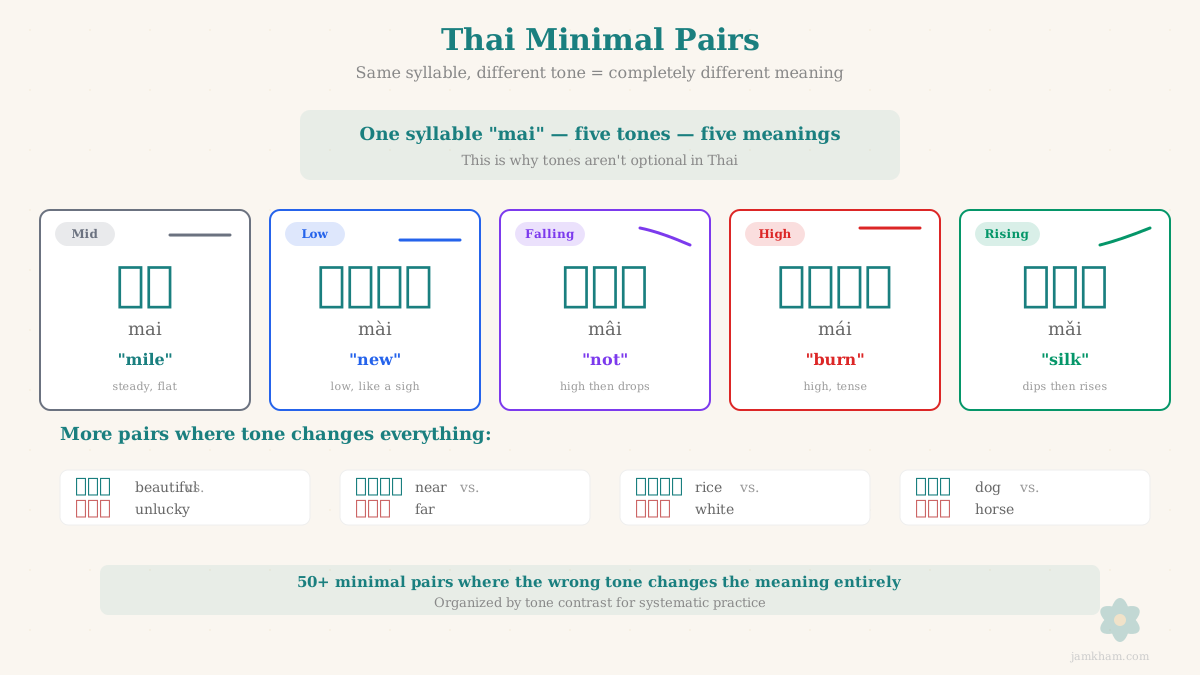
Thai is different. Tone is lexical. Change the tone, change the word. The syllable “mai” has at least five different meanings depending on which of Thai’s five tones you use.
This creates something linguists call minimal pairs: words that are identical in every way except tone. For Thai learners, these pairs are both a challenge and a powerful training tool.
Why Minimal Pairs Matter
When you confuse a minimal pair, you’re not just mispronouncing—you’re saying a completely different word. Imagine asking for “rice” (ข้าว khâao, falling tone) but accidentally producing “white” (ขาว khǎao, rising tone). Your sentence now makes no sense.
Native speakers can usually figure out what you mean from context. But relying on context means:
- You’re harder to understand
- Conversations require more effort from your listener
- In noisy environments or over the phone, you’re lost
- You’ll struggle to understand fast, natural Thai speech
Minimal pair practice attacks this problem directly. By training on words that differ only by tone, you build discrimination skills that transfer to all your Thai listening and speaking.
The Famous “Mai” Example
Let’s start with the word every Thai learner hears about: ไม (mai). One syllable sound, five meanings:
| Thai | Romanization | Tone | Meaning | Example Context |
|---|---|---|---|---|
| ไม้ | mái | high | wood, stick | ไม้ไผ่ (bamboo) |
| ใหม่ | mài | low | new | ของใหม่ (new thing) |
| ไม่ | mâi | falling | not | ไม่ใช่ (not that) |
| ไหม้ | mâi | falling | burn | ไฟไหม้ (fire) |
| ไหม | mǎi | rising | question particle / silk | ดีไหม (is it good?) |
There’s even a famous tongue-twister sentence: ไม้ใหม่ไม่ไหม้ไหม (mái mài mâi mâi mǎi) — “Does new wood not burn?”
Essential Minimal Pairs by Tone Contrast
Below are 50 minimal pairs organized by which tones they contrast. Focus on the pairs that give you the most trouble.
Mid vs. Low Tone
| Word 1 | Meaning | Word 2 | Meaning | Notes |
|---|---|---|---|---|
| กา (kaa) | crow | ก่า (kàa) | old (Lanna) | Regional word |
| มา (maa) | come | หม่า (màa) | hemp | Less common |
| นา (naa) | rice field | หน่า (nàa) | custard apple | Fruit name |
Mid vs. Falling Tone
| Word 1 | Meaning | Word 2 | Meaning | Notes |
|---|---|---|---|---|
| ไกล (glai) | far | ใกล้ (glâi) | near | Opposites! |
| คา (khaa) | to stick | ค่า (khâa) | value, cost | Important for shopping |
Mid vs. High Tone
| Word 1 | Meaning | Word 2 | Meaning | Notes |
|---|---|---|---|---|
| คา (khaa) | to stick | ค้า (kháa) | to trade | Low class + ้ = high |
Mid vs. Rising Tone
| Word 1 | Meaning | Word 2 | Meaning | Notes |
|---|---|---|---|---|
| ซวย (suay) | unlucky | สวย (sǔay) | beautiful | Compliment vs. insult! |
| มา (maa) | come | หมา (mǎa) | dog | Very common |
Low vs. Falling Tone
| Word 1 | Meaning | Word 2 | Meaning | Notes |
|---|---|---|---|---|
| ข่าว (khàao) | news | ข้าว (khâao) | rice | Essential food vocab |
| ป่า (pàa) | forest | ป้า (pâa) | aunt | Family term |
Low vs. Rising Tone
| Word 1 | Meaning | Word 2 | Meaning | Notes |
|---|---|---|---|---|
| หม่า (màa) | hemp | หมา (mǎa) | dog | Low vs rising on same syllable |
Falling vs. High Tone
| Word 1 | Meaning | Word 2 | Meaning | Notes |
|---|---|---|---|---|
| หม้า (mâa) | pot (dialect) | ม้า (máa) | horse | Falling vs high on same syllable |
Falling vs. Rising Tone
| Word 1 | Meaning | Word 2 | Meaning | Notes |
|---|---|---|---|---|
| ข้าว (khâao) | rice | ขาว (khǎao) | white | Very common confusion |
| หน้า (nâa) | face, page | หนา (nǎa) | thick |
Falling vs. Low Tone
| Word 1 | Meaning | Word 2 | Meaning | Notes |
|---|---|---|---|---|
| เต้า (tâo) | gourd | เต่า (tào) | turtle |
High vs. Rising Tone
| Word 1 | Meaning | Word 2 | Meaning | Notes |
|---|---|---|---|---|
| ม้า (máa) | horse | หมา (mǎa) | dog | Animal confusion! |
| ไม้ (mái) | wood | ไหม (mǎi) | silk / question |
The Most Dangerous Pairs
Some minimal pairs cause more problems than others. Here are the ones to prioritize:
1. ใกล้ (glâi) “near” vs. ไกล (glai) “far”
These are literal opposites, and the difference is just falling vs. mid tone. Say the wrong one, and your directions are backwards.
Practice tip: Associate falling tone with something close (falling down onto your feet) and mid tone with something distant (a flat horizon).
2. สวย (sǔay) “beautiful” vs. ซวย (suay) “unlucky”
Want to compliment someone? Use the rising tone carefully. The mid-tone version means unlucky or cursed—not exactly flattering.
Practice tip: Remember that compliments “rise” up—use the rising tone for positive meanings.
3. ข้าว (khâao) “rice” vs. ขาว (khǎao) “white”
You’ll encounter this pair constantly. Rice is falling, white is rising. Essential for ordering food.
Practice tip: Think of rice “falling” into your bowl.
4. ม้า (máa) “horse” vs. หมา (mǎa) “dog”
Both are common animals. High tone for horse, rising for dog.
Practice tip: Horses are “high” and majestic. Dogs “rise up” to greet you.
5. ป้า (pâa) “aunt” vs. ป่า (pàa) “forest”
Family terms matter. Falling tone for aunt, low tone for forest.
Practice tip: Your aunt might “fall” asleep, while forests are “low” on the ground.
How to Practice Minimal Pairs
Passive listening isn’t enough. Here’s a structured approach:
1. Discrimination Drills
Listen to pairs of words and identify which tone you hear. Start with obviously different tones (mid vs. falling), then progress to harder distinctions (high vs. rising).
2. Production Practice
Record yourself saying both words in a pair. Listen back. Can you hear the difference? If not, exaggerate the tones until the distinction is clear, then gradually return to natural pitch.
3. Sentence Context
Put minimal pairs into sentences where the wrong word would be nonsensical:
- ผมต้องการข้าว (phǒm tông gaan khâao) — I want rice
- ผมต้องการขาว (phǒm tông gaan khǎao) — I want white (?)
Hearing the wrong word in context makes the error obvious.
4. Spaced Repetition
Add your problem pairs to a flashcard system. The Jam Kham app includes dedicated tone cards that test exactly these distinctions, with separate tracking for tone accuracy.
Common Patterns
Notice some patterns in minimal pairs:
Tone Marks Help
Many minimal pairs are distinguished by tone marks in Thai script:
- ป่า (pàa, low) vs. ป้า (pâa, falling) — the mark changes from ่ to ้
Learning to read Thai makes these distinctions visible, not just audible.
Consonant Class Affects Default Tone
Words without tone marks get their tone from consonant class:
- Middle class consonants: mid tone
- High class consonants: rising tone (live syllable) or low tone (dead syllable)
- Low class consonants: mid tone (live), high tone (dead, short vowel), or falling tone (dead, long vowel)
Understanding this system helps predict which tone a word takes.
Some Pairs Are Extremely Common
The mai family (ไม้, ใหม่, ไม่, ไหม้, ไหม) appears in virtually every Thai conversation. The rice/white distinction (ข้าว/ขาว) comes up whenever you eat. Focus on high-frequency pairs first.
Beyond Minimal Pairs
Minimal pair practice builds toward automatic tone perception—hearing and producing tones without conscious effort.
As you progress, you’ll notice:
- Tones start to “sound different” rather than requiring analysis
- Your production becomes more natural and less exaggerated
- You catch yourself when you make tone errors
- Native speakers understand you more easily
This doesn’t happen overnight. But with focused minimal pair practice, you’re training the specific skill that matters most for Thai comprehension.
Start Practicing Now
Ready to train your tone discrimination? The Jam Kham app includes:
- Tone cards that test your ability to identify and produce tones
- Minimal pair drills that present confusable words side by side
- Separate tone tracking so you know exactly which distinctions need work
- Dual-speed audio to hear tones clearly, then at natural speed
Every vocabulary word you learn includes tone information, and your tone accuracy is tracked separately from word recognition. Because in Thai, knowing a word means knowing its tone.
The tone pairs in this article represent a selection of common minimal pairs. Thai has hundreds more. For a complete tone guide including rules and practice exercises, see our Thai Tones Guide.