
Thai Phrases for Hotels & Airbnbs: What to Actually Say
Thai hotel phrases for check-in, room problems, late checkout, Airbnb hosts, and weekly rates—the lines that actually move the conversation in Thailand.
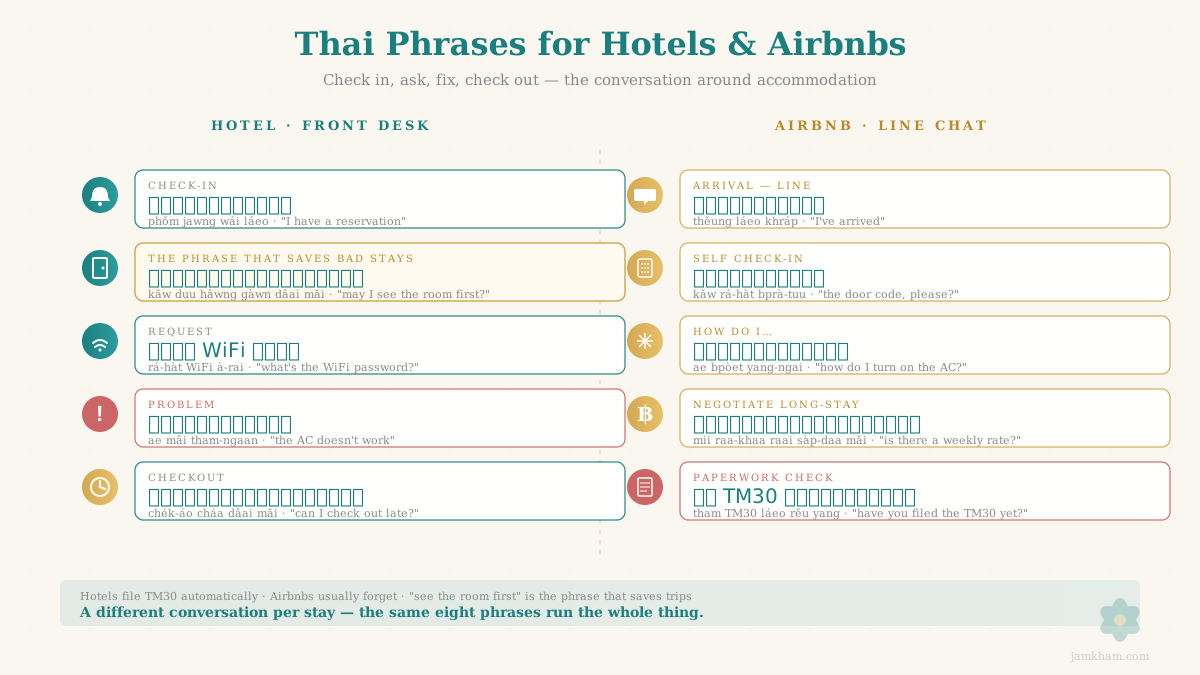
Most Thai hotel phrasebooks read like wedding-gift checklists: thirty items, technically complete, useful to nobody. You don’t need thirty hotel phrases. You need the eight or ten that actually carry the conversation—plus the cultural rhythm that tells you when to use which one, and what to do when your Airbnb host stops replying.
This guide covers the Thai hotel phrases that earn their keep across a real trip: booking, check-in, room requests, what to say when the AC dies at midnight, how Airbnb communication differs from a front-desk stay, and how to negotiate a weekly rate without sounding aggressive. If you want the quick reference card, our Thai phrases for hotels spoke page lays out the core fifteen in flashcard form. This is the conversation around them.
Hotel vs. Airbnb in Thailand: What Changed by 2026
Two things about Thai accommodation changed around 2023, and both affect how your host behaves more than what you say to them.
First, Airbnb sits in an awkward legal grey area. Under Thailand’s Hotel Act, any property renting to paying guests for less than 30 nights is technically operating as a hotel and needs a hotel license. Most condos can’t get one. A 2023 ministerial regulation broadened the “non-hotel” exemption to small properties (eight rooms or fewer, up to 30 guests), but the vast majority of Airbnb condo listings still don’t qualify. Enforcement is patchy, but condo juristic persons—the building management committees—can and do report rogue listings. Practically, this means your Airbnb host may be slightly evasive about your status when neighbors ask, and you might be coached to say you’re a friend.
Second, the TM30 notification—a legal requirement for the property owner to notify Thai Immigration of your stay within 24 hours of arrival—is handled automatically and reliably by hotels through their direct database integration. Most Airbnb hosts forget. If you’re staying long enough to need a visa extension or 90-day report, an unfiled TM30 can become a headache.
None of this changes the phrases below, but it explains why your Airbnb host might answer the same question differently than a hotel front desk would.
Booking and Confirming Before You Arrive
Most travelers book through Agoda, Booking.com, or Airbnb in English. The Thai comes in when you confirm by phone or LINE, or when you walk into a guesthouse without a booking.
phǒm/dì-chǎn jawng wái láeoผม/ดิฉันจองไว้แล้วI have a reservation alreadyUse ผม(phǒm) if you’re male, ดิฉัน(dì-chǎn) if you’re female (or the more casual ฉัน(chǎn)). The verb จอง(jawng) is the workhorse here, and you’ll hear it in three places: the act of booking, the noun for a reservation (การจอง(gaan-jawng)), and confirmation contexts.
phǒm chêu... jawng hâwng wái khrápผมชื่อ... จองห้องไว้ครับMy name is..., I've reserved a room (male speaker)This is the polite full-sentence version for arriving at a hotel where they want to look you up by name. Substitute ดิฉัน(dì-chǎn) and ค่ะ(khâ) for the female version.
mii hâwng wâang mǎiมีห้องว่างไหมany rooms available?The walk-in question, useful at guesthouses, smaller hotels in Chiang Mai, beach bungalows on the islands, and anywhere you didn’t pre-book. Pair it with the next line.
kheun lá thâo-ràiคืนละเท่าไหร่how much per night?คืน(kheun) is “night” and ละ(lá) is the per-unit particle, so the literal structure is “night-per how-much.” Use this for any walk-in, and use it before you ask to see the room—it sets the price frame before they show you something nicer than what you can afford.
Check-In: The Standard Exchange
A Thai hotel check-in is a short script, and it’s nearly identical whether you’re at a Marriott in Bangkok or a 600-baht guesthouse in Pai. The front desk leads. They’ll ask three things, in roughly this order:
Front-desk questions you'll hear
| Thai | Romanization | Meaning |
|---|---|---|
| จองไว้ไหมคะ | jawng wái mǎi khá | do you have a reservation? (female staff) |
| ขอพาสปอร์ตหน่อยครับ | khǎw pháat-sà-pawt nàwy khráp | passport please (male staff) |
| กี่คืนคะ | gìi kheun khá | how many nights? (female staff) |
Your answers map cleanly onto these. To the reservation question, จองไว้แล้วครับ/ค่ะ(jawng wái láeo khráp/khâ) with your phone showing the booking. To the passport question, hand it over—they’ll photocopy or scan it to register your stay, which every hotel is required to do. To the nights question, just give the number plus คืน(kheun): สามคืน(sǎam kheun) for three nights, หนึ่งสัปดาห์(nèung sàp-daa) for one week.
Room Requests: The Five You’ll Actually Use
Once you’re in, you’ll reach for a small number of requests over and over. These are the ones worth memorizing.
khǎw phâa-chét-tua phôem nàwyขอผ้าเช็ดตัวเพิ่มหน่อยextra towels, pleaseThe phrase opens with ขอ(khǎw) (the rising-tone “request” word—it’s the politest way to ask for anything) and ends with หน่อย(nàwy) (a softening particle that means “a little”). This ขอ...หน่อย(khǎw... nàwy) frame is the universal Thai request structure—drop almost any noun in the middle and you have a polite ask.
rá-hàt WiFi à-rai khrápรหัส WiFi อะไรครับwhat's the Wi-Fi password? (male speaker)รหัส(rá-hàt) is “code” or “password,” and Wi-Fi is just borrowed English. You’ll use this one a lot.
mii náam ráwn mǎiมีน้ำร้อนไหมis there hot water?Worth asking at cheap guesthouses before you commit. Many budget places only have cold water, which is fine in Phuket in April and miserable in Chiang Mai in December.
chék-áo cháa dâai mǎiเช็คเอาท์ช้าได้ไหมcan I check out late?The verb pair to know here is ช้า(cháa) (“late / slow”) versus เร็ว(reo) (“early / fast”). เช็คเอาท์เร็วได้ไหม(chék-áo reo dâai mǎi) works for an early checkout. Ask in the morning, not the night before—it’s a same-day favor.
mii dtûu-sép nai hâwng mǎiมีตู้เซฟในห้องไหมis there a safe in the room?ตู้เซฟ(dtûu-sép) is the borrowed compound “cabinet-safe.” Useful to ask before check-in if you’re carrying passports or cash.
When Things Go Wrong: Reporting Problems
The phrases that save trips are the ones for things broken at 11 PM. They share a simple frame: noun + เสีย(sǐa) or ไม่ทำงาน(mâi tham-ngaan).
Reporting things that don't work
| Thai | Romanization | Meaning |
|---|---|---|
| แอร์ไม่ทำงาน | ae mâi tham-ngaan | the AC doesn’t work |
| น้ำร้อนไม่มี | náam ráwn mâi mii | there’s no hot water |
| กุญแจห้องเสีย | gun-jae hâwng sǐa | the room key is broken |
| ไฟดับ | fai dàp | the power’s out |
| ไวไฟไม่ติด | wai-fai mâi tìt | the Wi-Fi isn’t connecting |
| ห้องน้ำตัน | hâwng-náam tan | the bathroom’s clogged |
| ห้องข้างๆ เสียงดังมาก | hâwng khâang-khâang sǐang dang mâak | the next room is very loud |
Pair these with ช่วยมาดูหน่อยได้ไหมครับ(chûai maa duu nàwy dâai mǎi khráp) and you have a complete maintenance call. ช่วย(chûai) means “help” and is the standard polite framing for asking someone to do something. ช่วย...หน่อยได้ไหม(chûai... nàwy dâai mǎi) is the polite-request-for-action twin of ขอ...หน่อย(khǎw... nàwy) for objects.
If you’d like to change rooms instead of waiting for a fix:
khǎw bplìan hâwng dâai mǎiขอเปลี่ยนห้องได้ไหมcan I change rooms?Reasonable hotels will accommodate this when something is genuinely broken. They may say เต็มหมดแล้ว(tem mòt láeo), which is sometimes true and sometimes a soft no.
Airbnb Phrases: Where the Conversation Lives on LINE
Airbnb in Thailand works nothing like a hotel front desk. There’s usually no front desk, often no on-site host at all, and almost everything happens over LINE—the host gives you their LINE ID after you book, and you’ll use it for arrival coordination, problems, and checkout.
Two cultural notes before the phrases. First, Thai LINE etiquette runs on stickers and short messages, not paragraphs. Don’t write essays. Second, your host is probably renting out a unit in a building where the practice is technically irregular, so they may be cagey about your status with neighbors or security. None of this is sinister—it’s the legal grey area in action.
thěung láeo khrápถึงแล้วครับI've arrived (male speaker)The arrival text. Send it the moment you’re at the building. Add อยู่หน้าตึก(yùu nâa tèuk) if it helps.
khǎw rá-hàt bprà-tuu nàwy dâai mǎi kháขอรหัสประตูหน่อยได้ไหมคะcould I have the door code? (female speaker)Most Airbnb condos use a numeric keypad or smart lock; the host sends the code by LINE. If they haven’t, this is how you ask.
gun-jae yùu thîi nǎiกุญแจอยู่ที่ไหนwhere's the key?For places using a physical key in a lockbox.
líp yùu trong nǎiลิฟต์อยู่ตรงไหนwhere's the elevator?The thing nobody tells you about Bangkok condo Airbnbs: many buildings have two lift banks (residents and service) and you may need the service one with a key fob. If you’re lost in the lobby, this is the phrase.
ae bpòet yang-ngaiแอร์เปิดยังไงhow do I turn on the AC?Thai air-con remotes are confusing in any language; Airbnb units often have unusual setups. เปิด(bpòet) is “open / turn on,” ปิด(bpìt) is “close / turn off,” and ยังไง(yang-ngai) is the casual “how.”
thíng gun-jae wái thîi nǎi tawn chék-áoทิ้งกุญแจไว้ที่ไหนตอนเช็คเอาท์where do I leave the key at checkout?The checkout question. Most hosts leave a key drop, a code-reset routine, or a “just leave it on the table” instruction.
Weekly and Monthly Stays: Negotiating the Rate
If you’re staying more than a few nights, especially at guesthouses and serviced apartments, the rate is almost always negotiable. This is straightforwardly expected, not pushy. The vocabulary is small.
Long-stay vocabulary
| Thai | Romanization | Meaning |
|---|---|---|
| รายสัปดาห์ | raai sàp-daa | weekly (rate) |
| รายเดือน | raai deuan | monthly (rate) |
| ลดราคา | lót raa-khaa | to reduce / discount the price |
| มัดจำ | mát-jam | deposit |
| ค่าน้ำค่าไฟ | khâa náam khâa fai | utilities (water and electric fees) |
Polite, direct, and entirely normal. Many guesthouses quote a nightly rate that’s effectively a “tourist asks once” rate—asking the second question often gets a 20-30% reduction for a week or more. Bangkok and Chiang Mai serviced apartments will usually quote a real monthly rate on request.
khâa náam khâa fai ruam mǎiค่าน้ำค่าไฟรวมไหมare utilities included?Critical for monthly stays. Some places quote a rate that excludes electricity, and for a heavy AC user in the hot months that can add a couple thousand baht or more—Thai rentals often bill electricity above the government rate.
Check-Out and the Quiet Tip
Checkout in Thailand is short. The vocabulary you need:
chék-áo khrápเช็คเอาท์ครับchecking out (male speaker)You hand over the key, they confirm the bill, and you pay any extras. Hotel mini-bars in Thailand are usually honor-system and they’ll ask:
thaan à-rai nai dtûu-yen mǎi kháทานอะไรในตู้เย็นไหมคะdid you have anything from the fridge? (female staff)Answer honestly. If you didn’t, ไม่ได้ทานครับ/ค่ะ(mâi dâai thaan khráp/khâ) (“I didn’t have anything”). If you did, name it: น้ำหนึ่งขวด(náam nèung khùat) (“one bottle of water”), เบียร์สองขวด(bia sǎwng khùat) (“two beers”).
On tipping: 20–50 baht for a bellhop, and 20 baht or so left for housekeeping if you like. Tipping is genuinely optional in Thailand and nobody expects it, but at smaller guesthouses where you’ve gotten to know the family running the place, a real ขอบคุณมากครับ/ค่ะ(khàwp-khun mâak khráp/khâ) said sincerely beats any tip.
A Quick Note on When to Use English
Almost every front desk at Bangkok hotels above the budget tier speaks workable English. So do staff at mid-range chains in Phuket, Chiang Mai, and Krabi. Where Thai actually matters: small guesthouses, family-run beach bungalows, Pai, Mae Hong Son, smaller cities in Isaan, and—universally—when something goes wrong outside the front-desk shift. The night-watch staff at a budget hotel often speak less English than the daytime team, and that’s when the AC will die.
Even where everyone speaks English, the traveler-track Thai approach we recommend isn’t about replacing English—it’s about getting the smile that you only get when you try. A ขอบคุณมากค่ะ(khàwp-khun mâak khâ) at checkout from a foreigner who clearly meant it usually gets a real one back.
The Top 12 Hotel & Airbnb Phrases
If you only learn twelve hotel phrases for a Thailand trip, make them these:
Top 12 Thai hotel and Airbnb phrases
| Thai | Romanization | Meaning |
|---|---|---|
| ผมจองไว้แล้ว | phǒm jawng wái láeo | I have a reservation |
| มีห้องว่างไหม | mii hâwng wâang mǎi | any rooms available? |
| คืนละเท่าไหร่ | kheun lá thâo-rài | how much per night? |
| ขอดูห้องก่อนได้ไหม | khǎw duu hâwng gàwn dâai mǎi | may I see the room first? |
| รหัส WiFi อะไร | rá-hàt WiFi à-rai | what’s the Wi-Fi password? |
| ขอผ้าเช็ดตัวเพิ่ม | khǎw phâa-chét-tua phôem | extra towels please |
| แอร์ไม่ทำงาน | ae mâi tham-ngaan | the AC doesn’t work |
| เช็คเอาท์ช้าได้ไหม | chék-áo cháa dâai mǎi | can I check out late? |
| ถึงแล้วครับ | thěung láeo khráp | I’ve arrived (Airbnb arrival text) |
| ขอรหัสประตู | khǎw rá-hàt bprà-tuu | may I have the door code? |
| มีราคารายสัปดาห์ไหม | mii raa-khaa raai sàp-daa mǎi | is there a weekly rate? |
| ขอบคุณมากครับ/ค่ะ | khàwp-khun mâak khráp/khâ | thank you very much |
These twelve will carry you through almost every accommodation conversation in Thailand. The rest is variations on the same patterns: ขอ...หน่อย(khǎw... nàwy) for requests, noun + เสีย(sǐa) for things that are broken, and ได้ไหม(dâai mǎi) stuck onto anything to make it a polite ask.
Frequently Asked Questions
What’s the most useful Thai hotel phrase to learn first?
ขอดูห้องก่อนได้ไหม(khǎw duu hâwng gàwn dâai mǎi) (“may I see the room first?”) saves more bad stays than any other phrase, especially at guesthouses. Seeing the room before you commit is completely normal in Thailand, and if it’s not what you expected, you can decline without awkwardness. For booked stays, ผม/ดิฉันจองไว้แล้ว(phǒm/dì-chǎn jawng wái láeo) (“I have a reservation”) is the standard check-in opener.
How do I communicate with an Airbnb host in Thailand?
Almost entirely over LINE, not phone. Once you book, your host will send you their LINE ID; arrival coordination, door codes, problems, and checkout all happen there. Send a short ถึงแล้วครับ/ค่ะ(thěung láeo khráp/khâ) (“I’ve arrived”) when you’re at the building, and keep messages brief—Thai LINE etiquette favors short messages and stickers over long paragraphs.
Is it normal to negotiate hotel prices in Thailand?
At guesthouses, small hotels, and serviced apartments, yes—especially for stays of a week or more. The polite phrase is ถ้าอยู่หนึ่งสัปดาห์ ลดราคาได้ไหม(thâa yùu nèung sàp-daa, lót raa-khaa dâai mǎi) (“if I stay one week, can the price come down?”). International chain hotels and large city hotels with online pricing don’t typically negotiate. Always ask มีราคารายสัปดาห์ไหม(mii raa-khaa raai sàp-daa mǎi) (“is there a weekly rate?”) before quoting nights.
Are Airbnbs legal in Thailand?
It’s complicated. Renting through Airbnb is legal, but under Thailand’s Hotel Act, properties renting to paying guests for under 30 nights technically require a hotel license. Most condos can’t get one. A 2023 ministerial regulation expanded the “non-hotel” exemption to small properties (eight rooms or fewer), but most Airbnb condo listings still don’t qualify. Enforcement is patchy but real, and condo committees can report rogue listings. Practically, this means your host may be cagey about your status with neighbors. Hotels are always the simpler option for short stays.
What is TM30 and do I need to worry about it?
TM30 is the Thai immigration form your accommodation provider must file within 24 hours of you taking up residence. Hotels file it automatically through a database integration—you’ll never notice. Airbnb hosts often forget. For short tourist stays this rarely matters; for stays long enough to require a visa extension or 90-day report, an unfiled TM30 can cause problems. If you’re on a long Airbnb stay, it’s reasonable to ask your host: ทำ TM30 แล้วหรือยัง(tham TM30 láeo rěu yang) (“have you filed the TM30 yet?”). If you’re staying long enough that TM30s, 90-day reports, and visa extensions are part of your life now, it’s worth seeing whether Thai script clicks for you — the first three modules are free, no card. Once you can read, the forms, the bank letters, and the notice on your door stop being a guessing game, and you’re off the agent treadmill.
Practice These Out Loud, Not Just on Paper
Knowing these Thai hotel phrases on paper is half the work. The other half is hearing them said at natural speed—ขอดูห้องก่อนได้ไหม(khǎw duu hâwng gàwn dâai mǎi) moves quickly when a real receptionist says it, and ขอ(khǎw) only sounds right when you nail the rising tone. Tones make the difference between sounding like a beginner who’s trying and a beginner who’s noticeably confident.
Jam Kham’s traveler track builds accommodation phrases as a real situation pack—check-in, requests, problems, and checkout—with clear audio, visual tone contours, and spaced repetition that catches your weak spots before your trip does. Speak Thai is coming soon — join the waitlist for founding pricing.
Related reading: 30 Thai Phrases for Travelers | Thai Phrases for Hotels (Quick Reference) | Thai for Digital Nomads