
Thailand Food by Region: What to Order Where
Thailand has four regional cuisines, not one 'Thai food.' What to order in each region -- from Chiang Mai's khao soi to Hat Yai's gaeng tai pla.
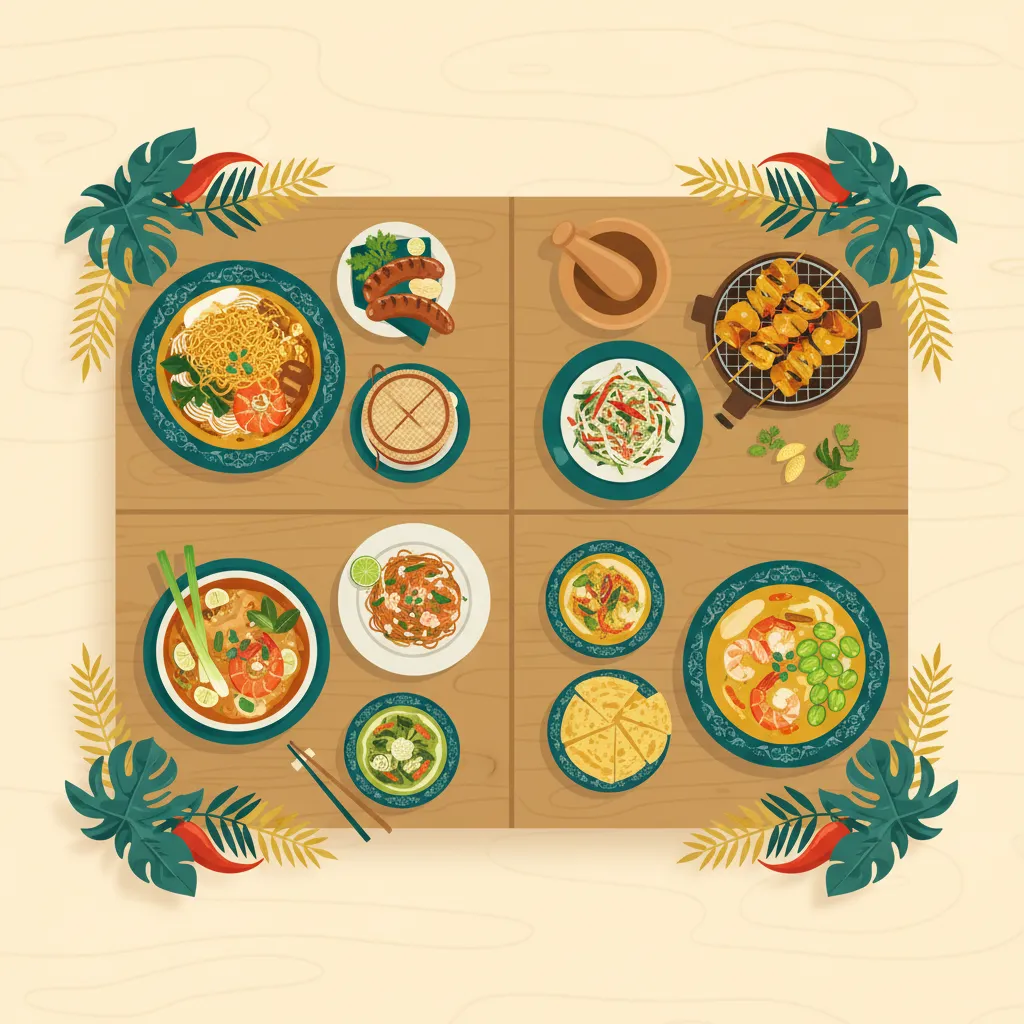
Most people arrive in Thailand thinking they know Thai food. They’ve had pad thai and green curry and maybe a decent massaman at a restaurant back home. That is Thai food — but it’s specifically Central Thai food. It’s one quarter of the picture.
Thailand has four culinary regions, and they are not subtle variations on a theme. Northern food is herbal and mild, built around sticky rice and Burmese-influenced curries. Isan food is fermented, funky, and bold. Southern food will burn your face off. Each region has its own core ingredients, its own staple rice, its own relationship with chili.
The good news: you don’t need to memorize everything. Three or four dishes per region is plenty. Know those, know how to say them, and you stop being the person who orders pad thai at every meal — which is a bit like visiting Italy and eating spaghetti bolognese in every city.
For the mechanics of actually placing your order at a stall or restaurant, see our street food ordering guide and restaurant ordering phrases. This guide is about what to order where.
Central Thailand: The Food You Already Know
Bangkok and the Central Plains are where most tourists eat, and this is the food that went global. If you’ve had “Thai food” outside Thailand, it was Central Thai cuisine — rich with coconut milk, balanced between sweet, sour, salty, and spicy, influenced by centuries of royal court cooking from the Ayutthaya kingdom (1351-1767).
The Dishes
dtôm yam gûngต้มยำกุ้งspicy sour shrimp soupTom yum kung became the first Thai culinary tradition inscribed on UNESCO’s Intangible Cultural Heritage list in 2024. It originated in riverside communities of the Central Plains — the earliest documented recipe dates to 1898. The soup is a balancing act: lemongrass, galangal, kaffir lime leaves, fish sauce, lime juice, and chilies, with the prawns cooked just until pink. Every restaurant has it. Most versions are good. The ones made with river prawns (กุ้งแม่น้ำ(gûng mâae náam)) are better.
phàt thaiผัดไทยstir-fried rice noodlesPad thai has an origin story most people don’t know. During World War II, Prime Minister Phibunsongkhram launched a nationalist campaign to promote Thai rice noodles over Chinese wheat noodles, commissioning a national noodle dish, giving it a name that literally means “Thai-style stir-fry,” and pushing it through government-backed stall programs. It was a nation-building project disguised as lunch. The dish stuck. It’s everywhere now, though most Thais eat it maybe once or twice a month — it’s not the everyday staple tourists assume.
gaaeng khǐao wǎanแกงเขียวหวานgreen curryGreen curry. The name in Thai literally means “sweet green curry,” which gives you a clue about the flavour profile — it’s not just heat. The green comes from fresh green chilies pounded into the curry paste. Coconut milk rounds it out. With chicken is classic (แกงเขียวหวานไก่(gaaeng khǐao wǎan gài)), but pork meatballs and fish versions are common too.
mát-sà-mànมัสมั่นmassaman curryMassaman topped CNN’s World’s 50 Best Foods list at number one. It’s the least “Thai-tasting” Thai curry — warm spices like cardamom, cinnamon, and cloves layered with peanuts and potatoes in thick coconut cream. The flavour profile reflects Muslim-Malay influences that entered through southern trade routes. Slow-cooked beef massaman (มัสมั่นเนื้อ(mát-sà-màn nʉ́a)) is the version to order.
Northern Thailand: Lanna Cuisine (Chiang Mai, Chiang Rai)
Northern Thai food — Lanna cuisine — is a different animal. Less spicy, more herbal. Sticky rice replaces jasmine as the default starch. Burmese and Shan influences are everywhere, a legacy of the 1558-1775 Burmese occupation of the Lanna kingdom. The flavour profile leans toward earthy and aromatic rather than sweet and coconutty.
When you’re in Chiang Mai, the first thing to order is this:
khâao sɔiข้าวซอยChiang Mai coconut curry noodlesKhao soi is THE Chiang Mai dish. Egg noodles in a rich coconut curry broth, topped with a nest of crispy fried noodles, pickled mustard greens, shallots, and a squeeze of lime. It’s Burmese-Shan in origin but Chiang Mai made it famous. You’ll find it on nearly every corner in the old city. The chicken version (ข้าวซอยไก่(khâao sɔi gài)) is most common, but beef khao soi is richer and worth seeking out. Khao Soi Khun Yai on Charoen Rat Road has had a line out the door for decades for a reason.
sâi ùaไส้อั่วNorthern Thai herbal sausageSai ua is a pork sausage packed with lemongrass, kaffir lime leaves, galangal, turmeric, and dried chilies — all pounded into the meat before it’s stuffed into casings and grilled over charcoal. It’s herbal and fragrant, not just spicy. Every market in Chiang Mai sells it. Eat it with sticky rice and the raw vegetable plate that comes alongside.
gaaeng hǎng leeแกงฮังเลBurmese-style pork belly curryKaeng hang lay is the dish that most clearly shows the Burmese fingerprint on Lanna cooking. The name comes from “hin lay” — heavy curry in Burmese. It’s a slow-cooked pork belly curry with ginger, tamarind, peanuts, and a dry spice mixture that includes turmeric and star anise. Traditionally made without coconut milk, though some modern versions include it. Dark, thick, sweet-sour. If you like rendang, you’ll like this.
nám phrík ɔ̂ngน้ำพริกอ่องNorthern tomato-chili dipNam prik ong is a thick, meaty dip made from minced pork, tomatoes, and dried chilies. It shows up as part of a ขันโตก(khǎn dtòok) spread — a raised tray of small dishes shared communally. You eat it with sticky rice and raw vegetables. Think of it as a Northern Thai bolognese you scoop with your hands.
The Sticky Rice Switch
Here’s a practical detail that catches people off guard. When you sit down at a Northern Thai restaurant and order, you don’t get a plate of jasmine rice. You get a basket of ข้าวเหนียว(khâao nǐao). You pull off a small ball, press it flat between your fingers, and use it to scoop up the curries and dips. This is the default. If you specifically want steamed jasmine rice, ask for ข้าวสวย(khâao sǔai) — but understand you’re asking for the non-standard option.
Isan: The Food That Feeds 20 Million People
Isan — Thailand’s northeast — is the country’s largest region by population. About 20 million people. The food is bold, sharp, and funky in ways that take some getting used to. Heavy fermentation. Raw herbs by the fistful. Chili that isn’t messing around. Isan cuisine is closely related to Lao food, which makes sense — the Mekong River is the border, and people on both sides have been eating the same way for centuries.
Isan food is also the most underrepresented cuisine in international Thai restaurants. It doesn’t photograph as prettily as a Central Thai curry. The flavours are more challenging. But once it clicks for you, it clicks hard.
sôm tamส้มตำgreen papaya saladSom tam is Isan’s gift to the world — featured on CNN’s World’s 50 Best Foods list. Green papaya shredded and pounded in a clay mortar with garlic, chilies, tomatoes, long beans, dried shrimp, peanuts, palm sugar, lime juice, and fish sauce. The pounding is the point; it bruises the papaya and melds the flavours in a way that chopping and mixing never could.
There are dozens of regional variations. ส้มตำไทย(sôm tam thai) is the tourist-friendly version with peanuts and dried shrimp. ส้มตำปูปลาร้า(sôm tam bpuu bplaa ráa) is the Isan version — it includes salted black crab and fermented fish paste, and it is aggressively pungent. Try it. But be warned.
lâapลาบIsan minced meat saladIsan laab is minced meat (pork, chicken, duck, or fish) tossed with roasted rice powder, fish sauce, lime juice, shallots, mint, and chilies. Served at room temperature. The roasted rice powder — ข้าวคั่ว(khâao khûa) — gives it a nutty, smoky crunch that holds the whole dish together.
gài yâangไก่ย่างgrilled chickenGai yang — marinated, grilled chicken — is originally Lao, but it’s become inseparable from Isan eating. The marinade is typically garlic, coriander root, white pepper, and fish sauce. The chicken is butterflied and grilled over charcoal until the skin is crispy and charred in spots. You eat it with som tam and sticky rice. That trio — gai yang, som tam, sticky rice — is the Isan holy trinity. Order all three and you’ve had a proper Isan meal.
nám dtòkน้ำตกwaterfall beef saladNam tok (“waterfall” — named for the meat juices that drip during grilling) is grilled beef sliced thin and dressed like laab, with lime, fish sauce, roasted rice, and mint. Also featured on CNN’s World’s 50 Best Foods list. It’s essentially laab’s grilled cousin.
Fermented Fish: The Backbone of Isan
bplaa ráaปลาร้าfermented fish pastePla ra is fermented fish — usually freshwater fish packed in salt and rice bran for months until it breaks down into a thick, intensely funky paste. It’s the soul of Isan cooking. Archaeological evidence traces fermented fish production along the Mekong back thousands of years. Nearly every Isan dish either contains pla ra directly or uses it in the background.
The smell is strong. Western visitors often balk at it. But pla ra does what fish sauce does — provides deep, savoury umami — just more intensely and with more character. If you eat Isan food and enjoy it, you’re eating pla ra whether you realize it or not.
Southern Thailand: Where the Heat Gets Serious
Southern Thai cuisine is the spiciest of the four regions. It’s also the most underestimated by visitors who stick to the islands and eat at tourist restaurants that tone things down. The authentic version is turmeric-heavy, seafood-driven, and influenced by the region’s significant Muslim population, particularly around Hat Yai and the Malaysian border provinces.
The southern dialect itself is different — some linguists describe it as having additional tonal distinctions beyond Central Thai’s five tones, spoken faster, with vocabulary that northern Thais sometimes don’t recognize. Food ordering in the deep south can be tricky even for Thais from Bangkok.
Phuket was named a UNESCO Creative City of Gastronomy in 2015 — the first in ASEAN. That designation wasn’t for pad thai.
gaaeng dtai bplaaแกงไตปลาfermented fish intestine curryGaeng tai pla is the dish that separates the curious from the committed. It’s a curry made from fermented fish intestines (the “tai pla”), turmeric, shrimp paste, and enough chilies to make your ears ring. The fermentation gives it a deep, funky intensity that no other Thai curry has. It’s traditionally eaten with rice and a spread of fresh vegetables to cut the heat. When southerners say this is their defining dish, they’re not exaggerating.
If you’re in Hat Yai or Nakhon Si Thammarat, order it. If it’s too much, that’s fine — now you know where the floor is.
khâao mòk gàiข้าวหมกไก่Thai chicken biryaniKhao mok gai is Thailand’s biryani — turmeric-stained rice with spiced chicken, fried shallots, and a cup of sweet green sauce on the side. It comes directly from Muslim culinary traditions and is a staple in the deep south and in Muslim neighbourhoods throughout Bangkok. The chicken is typically bone-in, slow-cooked until it falls apart. A plate costs 50-80 baht at a market stall and it’s one of the best lunch deals in the country.
roo-dtiiโรตีflatbread / Thai rotiSouthern roti is different from the banana-Nutella tourist version you see in Bangkok. In the south, roti is a staple bread served alongside curries — flakey, buttery, torn by hand and used to scoop up sauce. The sweet versions exist too (condensed milk, egg, banana), but roti as a curry accompaniment is the original.
sà-dtɔɔสะตอstink beans / bitter beansSataw — stink beans. The name is accurate. They smell strongly of sulfur. They’re also one of the most popular ingredients in southern cooking, usually stir-fried with shrimp paste and prawns (ผัดสะตอกุ้ง(phàt sà-dtɔɔ gûng)). The taste is better than the smell — bitter, crunchy, with a flavour somewhere between garlic and green beans. Locals eat them constantly. Try them at least once.
The Sticky Rice Line
There’s an invisible line running across Thailand that most visitors never notice. North and northeast of it, sticky rice — ข้าวเหนียว(khâao nǐao) — is the staple grain. South and central, jasmine rice — ข้าวสวย(khâao sǔai) — is standard.
This is not a minor preference. It’s cultural identity. In the north and Isan, sticky rice is the default, the assumed, the essential. Meals are built around it. You pull off a clump, roll it in your palm, and use it to grab everything else on the table. Jasmine rice is for special occasions or Central Thai restaurants.
In Central and Southern Thailand, jasmine rice serves the same role. Dishes are soupier, saucier — designed to be ladled over a mound of steamed rice that absorbs the liquid.
Thai culture treats rice with deep respect. The rice goddess แม่โพสพ(mâae phoo-sòp) (Mae Phosop) is still honoured in rural farming communities. Wasting rice is considered disrespectful. Finishing what’s on your plate isn’t just good manners — it has spiritual weight.
When you cross from one rice zone to another, pay attention. The change in starch tells you the food around you has shifted.
Regional Ordering Cheat Sheet
What to Order Where
| Region | Dish | Thai | What to Expect |
|---|---|---|---|
| Central | Tom yum kung | ต้มยำกุ้ง | Hot-sour prawn soup, lemongrass-forward |
| Central | Pad thai | ผัดไทย | Stir-fried noodles, sweet-salty-sour |
| Central | Green curry | แกงเขียวหวาน | Coconut curry, fresh green chili heat |
| Central | Massaman | มัสมั่น | Warm-spice curry with peanuts, potatoes |
| North | Khao soi | ข้าวซอย | Coconut curry noodles with crispy noodle top |
| North | Sai ua | ไส้อั่ว | Herbal pork sausage, grilled |
| North | Kaeng hang lay | แกงฮังเล | Burmese-style pork belly, sweet-sour-spicy |
| North | Nam prik ong | น้ำพริกอ่อง | Pork-tomato chili dip with sticky rice |
| Isan | Som tam | ส้มตำ | Green papaya salad, pounded in mortar |
| Isan | Laab | ลาบ | Minced meat with lime, herbs, roasted rice |
| Isan | Gai yang | ไก่ย่าง | Grilled marinated chicken, charcoal-smoky |
| Isan | Nam tok | น้ำตก | Grilled beef salad, dressed like laab |
| South | Gaeng tai pla | แกงไตปลา | Fermented fish intestine curry, very spicy |
| South | Khao mok gai | ข้าวหมกไก่ | Thai biryani, turmeric rice with chicken |
| South | Stink bean stir-fry | ผัดสะตอกุ้ง | Prawns with bitter beans and shrimp paste |
| South | Roti with curry | โรตี | Flakey flatbread, tear and scoop |
Eating by Region, Not by Default
Most visitors to Thailand eat Central Thai food for their entire trip — even when they’re in Chiang Mai, even when they’re in Isan, even when they’re on a southern island. They order pad thai and green curry because those are the names they know. The tourist restaurants oblige because that’s what tourists order.
Break the loop. When you’re in Chiang Mai, order khao soi and sai ua. When you’re in Khon Kaen or Udon Thani, get the som tam with pla ra and a plate of gai yang. When you’re in Krabi or Hat Yai, ask for gaeng tai pla and see what happens.
The staff will notice. You’ll get better food. And you’ll eat four countries’ worth of cooking in one trip instead of having the same meal in four different postcodes.
Related reading: Thai Food Vocabulary by Region | Four Kitchens, One Country: How History Shaped Thai Cuisine | Thai Street Food Ordering Guide | How to Order Food in Thai