
Thai Script: Why It's More Logical Than English
English gives you 'through,' 'though,' 'rough,' and 'cough.' Thai doesn't do that. Learn the consonant class system that makes Thai spelling predictable.
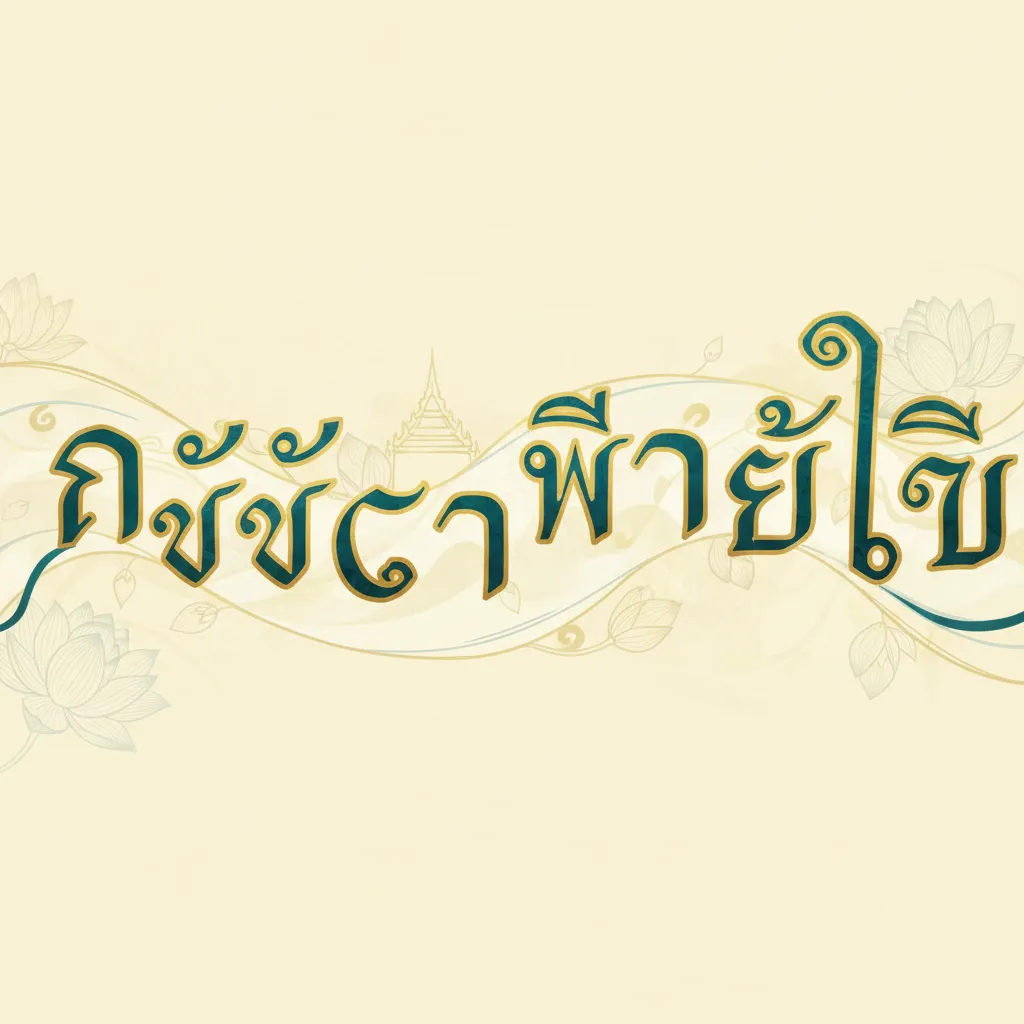
Looping curves. Marks floating above and below. No spaces between words. At first glance, Thai script looks impenetrable.
It isn’t. Thai spelling follows consistent rules. English gives us “through,” “though,” “rough,” and “cough”—four pronunciations for “-ough.” Thai doesn’t work that way. Learn the system, and you can pronounce words you’ve never seen.
Our syllable breakdown feature shows you exactly how each Thai word is segmented and pronounced.
Writing System Type
Thai script is an abugida (alphasyllabary). Each consonant carries an inherent vowel (usually /a/ or /o/), and diacritics modify it. Consonants and vowels combine into syllable units.
Devanagari (Hindi, Sanskrit), Burmese, Khmer, and Lao scripts work similarly. Thai fits a regional pattern.
Origins
Traditional accounts credit King Ramkhamhaeng of Sukhothai with creating Thai script around 1283 CE, adapting Old Khmer script (which descended from Indian Brahmi via the Pallava alphabet) to fit Thai sounds and tones.
The Ram Khamhaeng Inscription (traditionally dated to c.1292 CE) is the oldest known example. Literate Thai speakers today can still read it—the script has stayed remarkably stable for over 700 years.
44 Letters, 21 Sounds
Thai has 44 consonant letters (42 in modern use—ฃ and ฅ are obsolete). But Thai only has about 21 consonant sounds.
The redundancy serves a purpose: Thai consonants encode both sound and tone information. Multiple letters represent the same sound, and the letter choice affects the syllable’s tone.
English uses “c” and “k” for the same /k/ sound. Thai goes further—several letters for each sound, each in a different tone class.
Consonant Classes
Every Thai consonant belongs to one of three classes. This determines the syllable’s default tone—the system behind the five tones covered earlier. See our tone rules guide for how consonant classes determine tone.
Default in unmarked live syllables: Mid tone
The baseline. Nine consonants, common in everyday words.
กา(gaa) — ก (mid class) + long vowel + no mark = mid tone
Default in unmarked live syllables: Rising tone
Eleven consonants that “pull” toward higher tones.
ขา(khǎa) — ข (high class) + long vowel + no mark = rising tone
Default in unmarked live syllables: Mid tone
The largest class (24 consonants). Same default as mid class in unmarked syllables, but responds differently to tone marks.
มา(maa) — ม (low class) + long vowel + no mark = mid tone
Live vs. Dead Syllables
The second factor in tone calculation.
Live syllables end with a long vowel or sonorant consonant (ม, น, ง, ว, ย).
Dead syllables end with a short vowel or stop consonant (ก, บ, ด, glottal stop).
| Class | Live (no mark) | Dead, short vowel (no mark) | Dead, long vowel (no mark) |
|---|---|---|---|
| Mid | Mid | Low | Low |
| High | Rising | Low | Low |
| Low | Mid | High | Falling |
ขา(khǎa) (high class, live) = rising tone. ขาด(khàat) (high class, dead) = low tone.
Tone Marks
Four diacritics modify the default tone:
| Mark | Name |
|---|---|
| ่ | Mai ek |
| ้ | Mai tho |
| ๊ | Mai tri |
| ๋ | Mai chattawa |
Tone Mark Effects by Class
| Mark | Mid Class | High Class | Low Class |
|---|---|---|---|
| (none, live) | Mid | Rising | Mid |
| (none, dead, short vowel) | Low | Low | High |
| (none, dead, long vowel) | Low | Low | Falling |
| ่ | Low | Low | Falling |
| ้ | Falling | Falling | High |
| ๊ | High | — | — |
| ๋ | Rising | — | — |
Mai tri and chattawa only appear with mid-class consonants.
Vowels
32 vowel forms, but most are long/short pairs:
- า / ะ (aa / a)
- ี / ิ (ii / i)
- ู / ุ (uu / u)
- โ- / โ-ะ (oo / o)
- เ- / เ-ะ (ee / e)
Vowel length changes meaning. มา(maa) (long) differs from a short /ma/.
Vowel Positions
Thai vowels appear before, after, above, below, or around consonants:
- Before: เ-, แ-, โ-, ใ-, ไ-
- After: -า, -ำ
- Above: -ิ, -ี, -ึ, -ื
- Below: -ุ, -ู
- Around: เ-า, เ-ีย, แ-ะ
Each vowel has a fixed position. เ always precedes the consonant. า always follows. Not random—just different from English. Practice vowel recognition with our vowel guide which covers all combinations.
No Word Spaces
Thai uses spaces for clause or sentence breaks, not word boundaries.
ฉันกินข้าว(chǎn gin khâao)No spaces between ฉัน, กิน, and ข้าว. Readers parse word boundaries through vocabulary recognition and grammatical intuition—a skill that builds alongside reading practice.
Reading Example: ข้าว (Rice)
ข้าว (khâao)
- ข — high-class consonant, /kh/
- ้ — mai tho tone mark
- า — long /aa/ vowel
- ว — final /w/ (sonorant = live syllable)
High class + mai tho = falling tone. Result: khâao.
Compare ขาว (khǎao) — white:
Same consonant, same vowel, same final—no tone mark. High class + no mark + live = rising tone.
Different tone mark, different word.
Common Mistakes
Reading letter-by-letter: Thai works in syllable chunks. Consonant class, vowel, tone mark, and final consonant combine as a unit.
Ignoring consonant classes: Tone determination requires knowing the class. Memorizing individual word tones doesn’t scale.
Romanization dependency: Romanization hides the patterns. Tone rules are visible in Thai script; they’re invisible in transcription.
Expecting word spaces: Thai spaces indicate phrasing, not words.
Learning Path
Weeks 1-2: 42 consonants with sounds and classes. Recognition, not production. Use color coding for classes.
Weeks 3-4: Core vowels. Simple words with audio.
Month 2: Tone rules applied to vocabulary. Patterns start clicking through repetition.
Month 3+: Real Thai—signs, menus, social media. Speed builds through volume.
The goal: automatic recognition that lets you focus on meaning rather than decoding. Move from recognition to production with our reading practice exercises.
The key is consistent practice over time, not marathon study sessions. Jam Kham’s curriculum introduces script alongside vocabulary—you learn to read real words, not abstract letters.
Why Bother
Romanization-only learning is like studying music without notation. You can get somewhere, but you miss the structural logic.
Thai script reveals:
- Why words have specific tones
- Spelling patterns in related words
- Loanword origins (they look visually distinct)
- Pronunciation of unfamiliar words
Signs, menus, subtitles, social media—they become readable. Thai stops being visual noise.
Learn Thai script alongside real vocabulary, not in isolation. Try Jam Kham free—every card shows Thai script with audio and romanization.
Next: Thai Language History—Khmer, Sanskrit, and Pali layers in the vocabulary you’re learning.