
Anuban, Prathom, Mathayom: Thai School Levels Explained
Anuban, prathom, mathayom — what each Thai school level means, the ages in each year, and how to read a class label like ม.4/2 on sight.

Anuban, prathom, mathayom — what each Thai school level means, the ages in each year, and how to read a class label like ม.4/2 on sight.
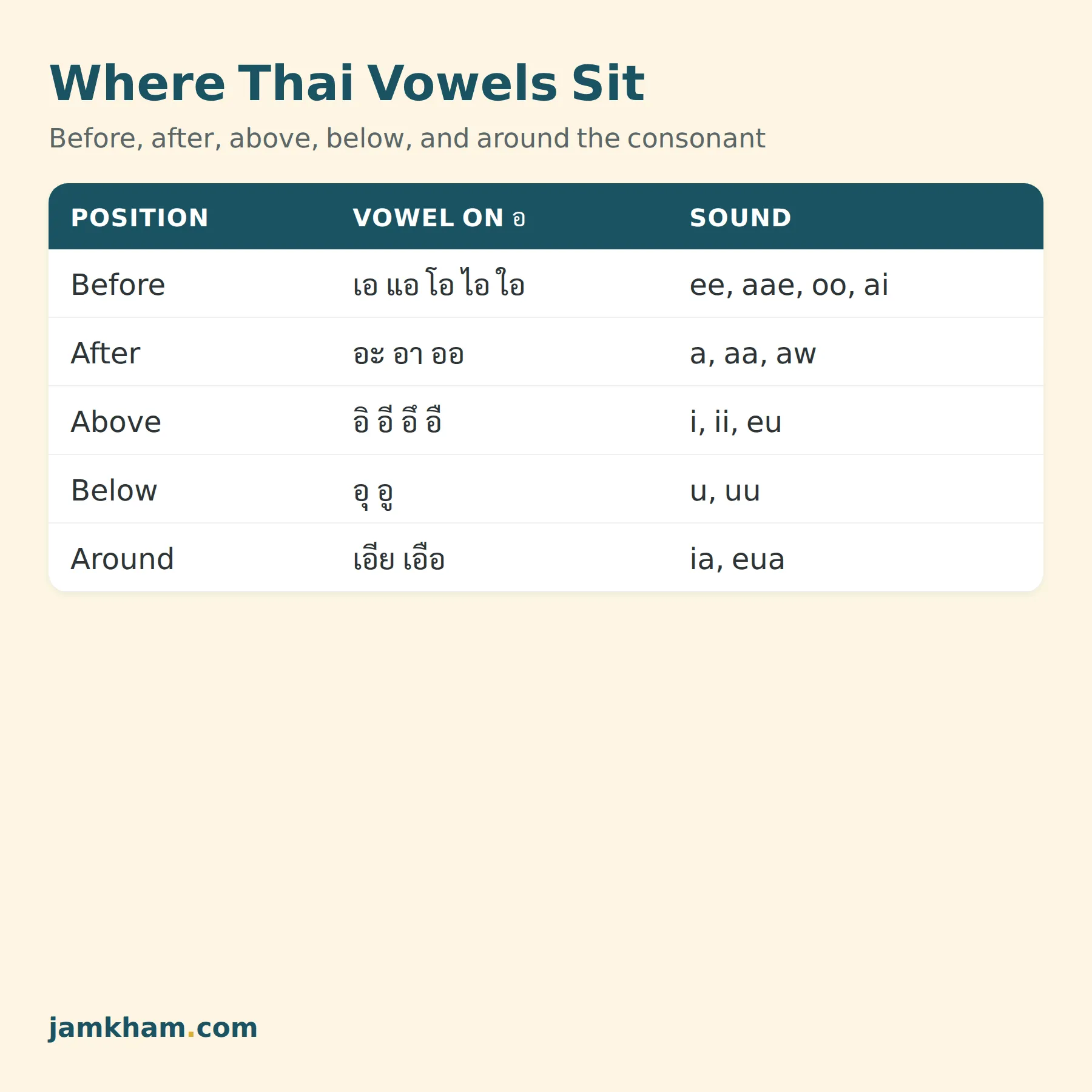
Thai vowels attach before, after, above, below, or around consonants — and short vs. long length changes a word's meaning. Here's how to read the chart.
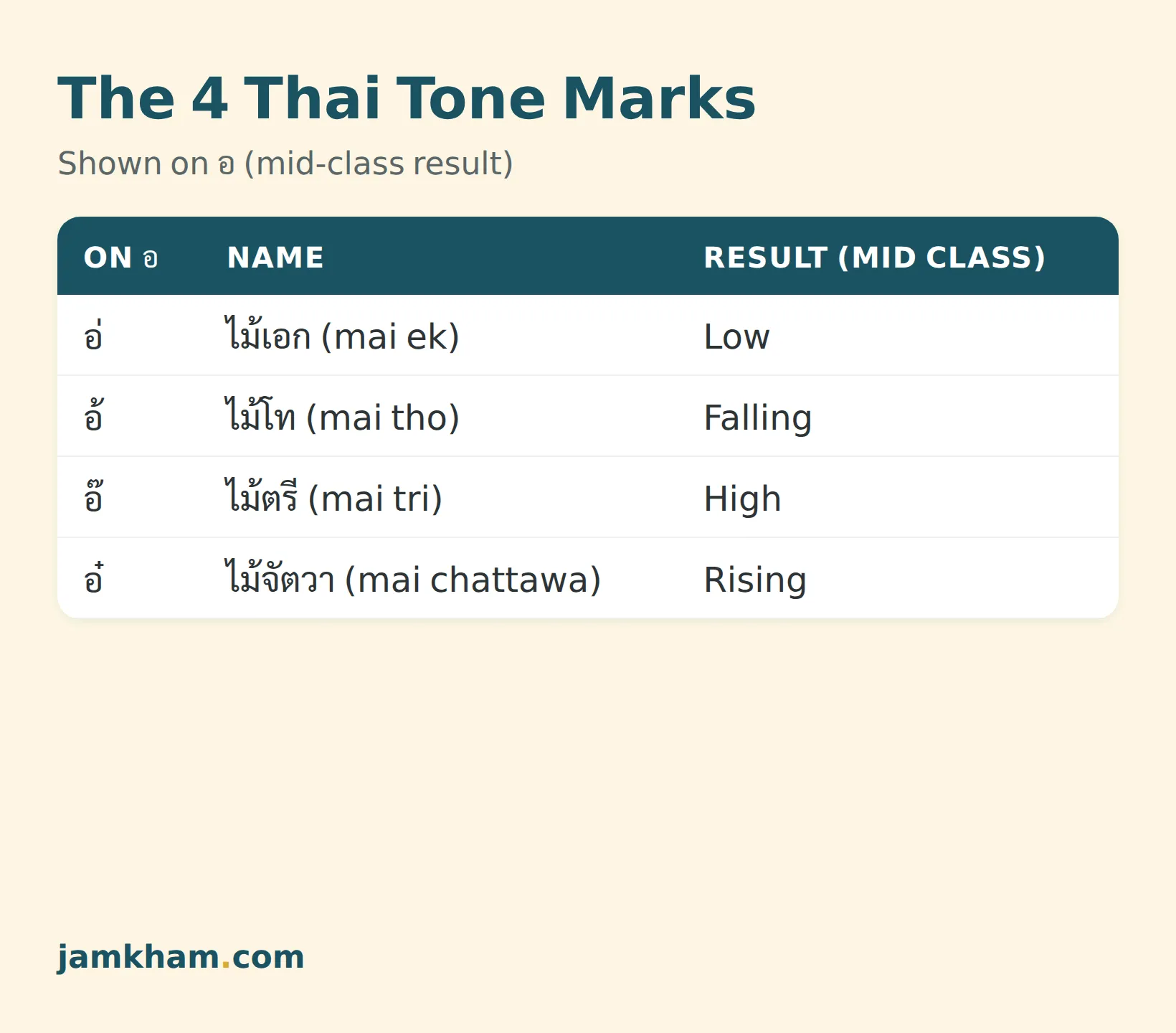
Writing Thai exposes gaps reading lets you skip: head loops, pre-posed vowels, tone marks on the wrong letter, and letters you can't pick by ear.

A beginner's guide to Thai: the five tones, the 44-letter script, grammar that's simpler than English, and polite phrases to start speaking with respect.

Discover the art of Thai writing with our guide, "Understanding the Basics of Thailand Writing." Master the Thai language script, alphabet, and tones.

The best resources for learning the Thai alphabet fast — plus how to pair them with a course or tutor and actually start reading.
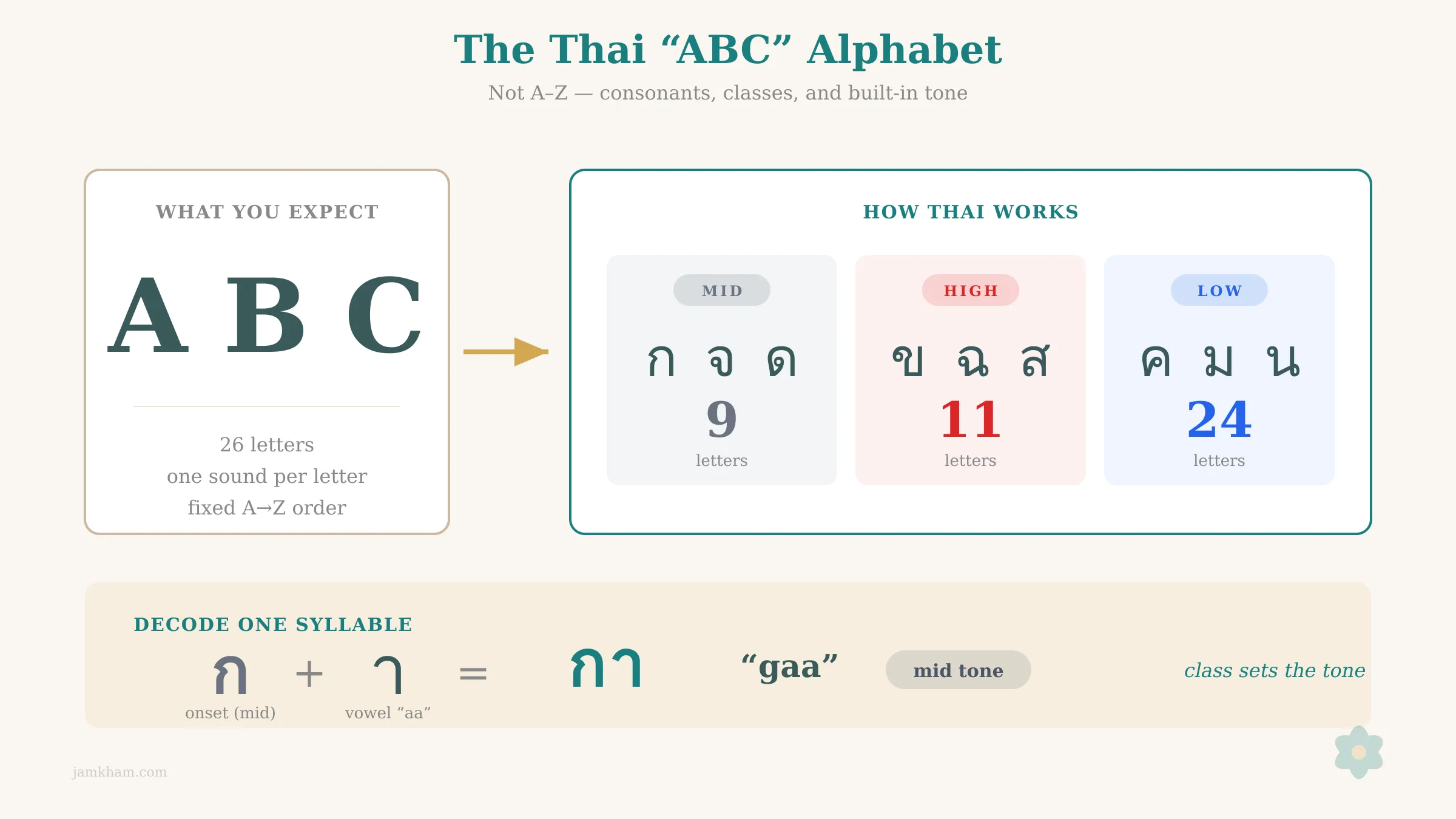
There's no Thai ABC. The Thai alphabet is 44 consonants in 3 classes, with vowels that attach as marks and tones built into the script — here's how it works.

Should you learn to read or speak Thai first? The honest answer depends on your goal and timeline — plus why reading makes speaking stick.

First Thai words in a week, signs and menus in about 8. A realistic, stage-by-stage timeline for the Thai alphabet at 10–15 minutes a day.

The กไก่ poster order is the slow way. Learn the highest-frequency Thai letters first and you'll read real words—กา, ดี—from day one.
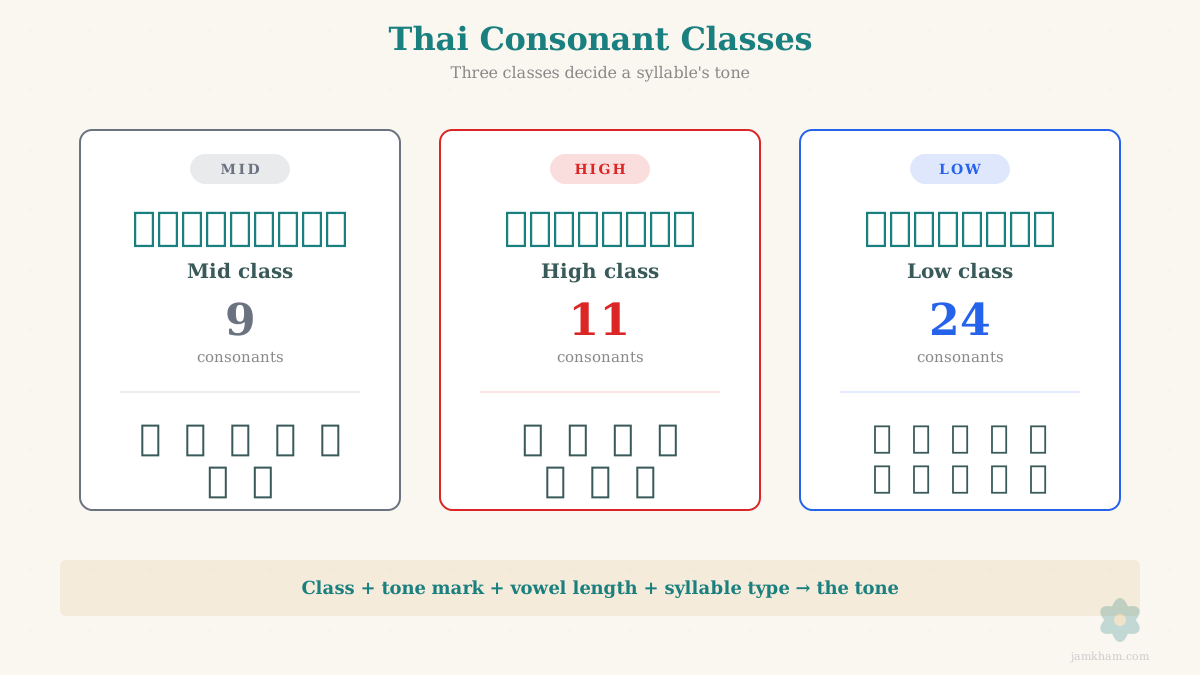
Thai has 44 consonant letters but only 21 sounds. The 'extras' encode tone information. Learn the 3-class system and stop memorizing tones word-by-word.

Reading Thai left-to-right? Ignoring consonant class? These 7 habits from English make Thai harder than it needs to be. Here's how to unlearn them.
English gives you 'through,' 'though,' 'rough,' and 'cough.' Thai doesn't do that. Learn the consonant class system that makes Thai spelling predictable.