
Thai Weather Vocabulary: Hot, Rainy & Cool Season Guide
Thailand's three seasons — hot, rainy, cool — explained with the Thai vocabulary to ask about weather, plan your trip, and pack right for each one.
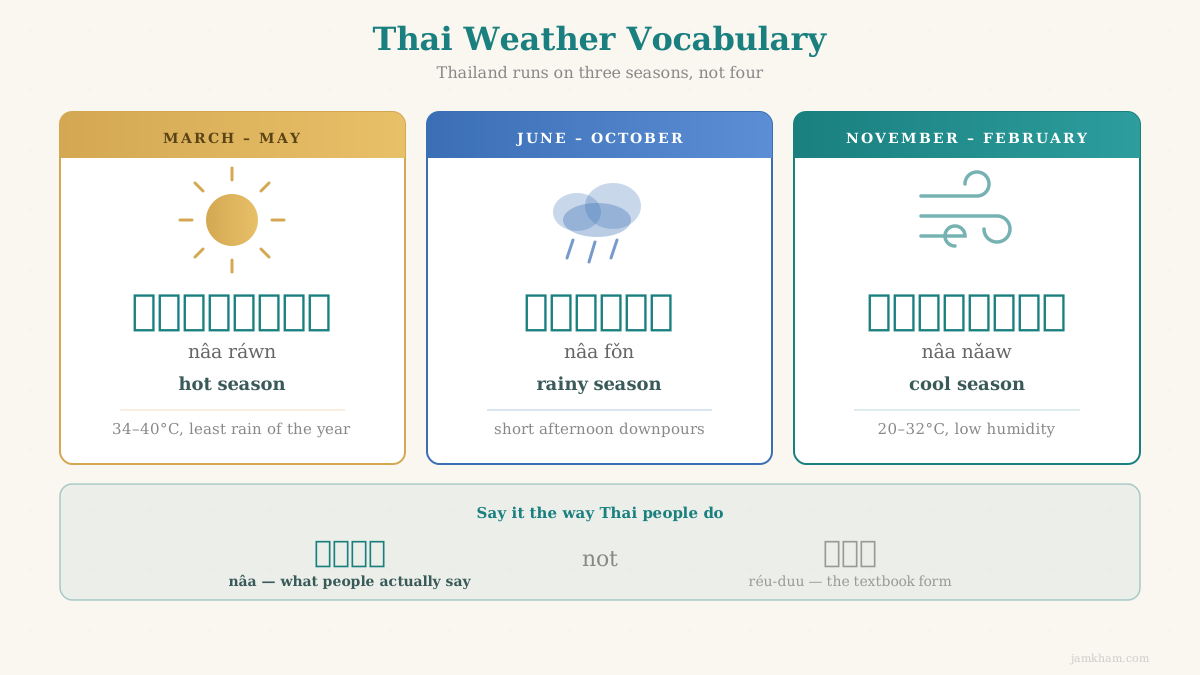
Ask five people when the “best time to visit Thailand” is and you’ll get five different answers, because the honest answer depends on where you’re going and what you can tolerate. Thailand doesn’t have four seasons — it has three: hot, rainy, and cool. Learning the vocabulary for each one does two things at once. It helps you plan the trip itself — what to pack, which coast to pick, whether that April date is a good idea — and it gives you a set of words for one of the most reliable Thai small-talk topics there is.
Thailand’s Three Seasons at a Glance
Here’s the yearly cycle in one table. These are national averages — actual timing shifts by region, which we’ll get to.
Thailand's three seasons
| Season | Thai (formal) | Thai (everyday) | Months | Feel |
|---|---|---|---|---|
| Hot season | ฤดูร้อน (réu-duu ráwn) | หน้าร้อน (nâa ráwn) | March–May | 34–40°C, humid, and the least rain of the year |
| Rainy season | ฤดูฝน (réu-duu fǒn) | หน้าฝน (nâa fǒn) | June–October | Short, heavy afternoon downpours; ~85% of the year’s rain falls here |
| Cool season | ฤดูหนาว (réu-duu nǎaw) | หน้าหนาว (nâa nǎaw) | November–February | 20–32°C, low humidity — most travelers’ favorite window |
Hot Season Vocabulary (มีนาคม–พฤษภาคม)
Hot season is exactly what it sounds like — Bangkok regularly hits the high 30s°C with humidity that makes it feel hotter still. It’s also the driest of the three seasons, which is why it pairs badly with April’s water festival crowds unless you plan for both.
ráwnร้อนhotThe base word. Add มาก(mâak) for “very hot” — ร้อนมาก(ráwn mâak) — which you’ll say more than you expect to.
Other hot-season words worth knowing:
- อากาศ(aa-gàat) — the general word for weather, used constantly
- แดด(dàet) — not “sun” the object (that’s ดวงอาทิตย์) but the heat and glare of it, as in แดดแรง(dàet raeng)
- เหงื่อ(ngèua) — as in เหงื่อออกเยอะ(ngèua àwk yóe)
- ร้อนจนทนไม่ไหว(ráwn jon thon mâi wǎi) — an exaggeration Thais use often, half-joking
Rainy Season Vocabulary (มิถุนายน–ตุลาคม)
Rainy season scares off more travelers than it should. Most days aren’t washouts — you typically get a heavy downpour for an hour or two, often in the afternoon, and clear skies the rest of the day. It’s also the cheapest, least crowded time to visit most of the country.
fǒn dtòkฝนตกit's raining (rain falls)Notice the verb: in Thai, rain “falls” (ตก(dtòk)), not “comes” the way English speakers often assume. Get this pattern once and a lot of other weather phrases fall into place around it.
- ฝนตกหนัก(fǒn dtòk nàk) — add หนัก (heavy) for a real downpour
- ฝนจะตกไหม(fǒn jà dtòk mǎi) — the question you’ll actually need, checking with a hotel desk or driver
- ร่ม(rôm) and เสื้อกันฝน(sêua gan fǒn) — กัน here means “to protect against,” a useful building block (also in เสื้อกันหนาว, “cold-protection jacket,” i.e. a winter coat)
- ชื้น(chéun) — describes the air, and sometimes your hotel room if it’s been raining for days
- มรสุม(maw-rá-sǔm) — the more technical word you’ll see in forecasts and news, less often in casual speech
Cool Season Vocabulary (พฤศจิกายน–กุมภาพันธ์)
Cool season is when most guidebooks say to go, and the vocabulary reflects a season Thai people genuinely enjoy rather than endure.
- หนาว(nǎaw) — technically “cold,” though Thai people will use it for anything under about 25°C, which can amuse visitors from colder climates
- เย็น(yen) — milder than หนาว; also the everyday word for “evening” (เย็นนี้, “this evening”) and for cold drinks (ชาเย็น, iced tea)
- เย็นสบาย(yen sà-baai) — the compliment Thai people pay this season specifically; สบาย(sà-baai) is one of the most-used words in the language
- หนาวมาก(nǎaw mâak) — you’ll hear this in the north (Chiang Mai, Pai, Mae Hong Son), where nighttime temperatures drop into single digits Celsius in December and January
Weather Small Talk: The Questions and Answers You’ll Actually Use
Weather is one of the safest, most common Thai conversation openers — with hotel staff, taxi drivers, or a shop owner waiting out a downpour with you. Here’s the core exchange:
wan-níi aa-gàat bpen yang-ngai bâangวันนี้อากาศเป็นยังไงบ้างHow's the weather today?A natural response might be:
wan-níi aa-gàat ráwn mâakวันนี้อากาศร้อนมากToday's weather is very hotOr, checking a forecast before heading out:
phá-yaa-gawn aa-gàatพยากรณ์อากาศweather forecastRegional Differences: Why “Rainy Season” Isn’t One Thing
This is the part most generic packing guides skip, and it changes where you should actually go.
Thailand’s two coastlines sit on opposite sides of the same monsoon system, so their rainy seasons don’t line up:
- Andaman coast (Phuket, Krabi, Koh Lanta, Khao Lak): best December–March; wettest May–October, with the worst of it around September
- Gulf coast (Koh Samui, Koh Pha Ngan, Koh Tao): best roughly July–September, but wettest October–December — the opposite pattern from the Andaman side, because the northeast monsoon that soaks the Gulf islands in late autumn is the same system bringing cool, dry air to the mainland
In practice, this means “avoid Thailand’s rainy season” isn’t good advice on its own — it depends entirely on which coast you’re booking. A trip to Koh Samui in September can be perfectly pleasant while Phuket is having its wettest month, and vice versa in November.
The Phuket Language Survival Guide covers Andaman-specific phrases if that’s your coast; the seasonal pattern above is worth checking before you lock in dates either way.
Choosing Your Trip Dates by Season
A quick way to think about the tradeoffs:
- Cool season (Nov–Feb): best weather nationwide, highest prices, biggest crowds — book well ahead, especially December and January
- Hot season (Mar–May): intense heat, especially inland (Bangkok, Chiang Mai); fewer crowds than cool season; April brings Songkran, which is unmissable but also the peak of both heat and tourist volume
- Rainy season (Jun–Oct): cheapest rates, lush green landscapes, short predictable afternoon rain rather than all-day washouts (with regional exceptions above) — underrated for budget travelers who don’t mind planning outdoor activities around mornings
None of these seasons rule out a good trip. They just call for different packing lists and different expectations, and knowing the vocabulary means you can actually ask locals what a given week has been like recently — which beats any app.
Frequently Asked Questions
What are the three seasons in Thailand?
Thailand has three seasons: hot season (ฤดูร้อน / หน้าร้อน) from March to May, rainy season (ฤดูฝน / หน้าฝน) from June to October, and cool season (ฤดูหนาว / หน้าหนาว) from November to February. In everyday speech, Thai people typically use the colloquial หน้า forms rather than the formal ฤดู forms.
What is the best time to visit Thailand for weather?
Cool season, November through February, offers the most comfortable weather nationwide with lower humidity and temperatures generally between 20–32°C. It’s also the most expensive and crowded season. The right time also depends on which coast you’re visiting — the Andaman coast (Phuket, Krabi) and Gulf coast (Koh Samui, Koh Tao) have different monsoon patterns.
How do you say “it’s raining” in Thai?
“It’s raining” is ฝนตก (fǒn dtòk), literally “rain falls.” To ask if it will rain, say ฝนจะตกไหม (fǒn jà dtòk mǎi). For heavy rain, add หนัก: ฝนตกหนัก (fǒn dtòk nàk).
Is rainy season a bad time to visit Thailand?
Not necessarily. Rainy season usually means short, heavy afternoon downpours rather than all-day rain, along with the cheapest prices and smallest crowds of the year. The exception is the Gulf coast islands (Koh Samui, Koh Pha Ngan, Koh Tao), which see their wettest weather later, around October–December, opposite the mainland’s pattern.
What does หน้าฝน mean, and is it different from ฤดูฝน?
Both mean “rainy season.” ฤดูฝน (réu-duu fǒn) is the formal, written form you’ll see on forecasts. หน้าฝน (nâa fǒn) is what Thai people actually say in conversation — หน้า is a colloquial word for “season” used the same way with หน้าร้อน (hot season) and หน้าหนาว (cool season).
Talk Weather Like a Local, Not a Phrasebook
Weather vocabulary is small talk, but it’s the kind of small talk that comes up daily — with a hotel receptionist, a songthaew driver, a vendor waiting out a downpour next to you. Getting it right (and using หน้า instead of ฤดู) is a small, easy signal that you’ve spent real time learning the language people actually speak, not just the version in a textbook.
Jam Kham’s Speak Thai pack builds practical, situational vocabulary like this around clear audio, so the tones stick the first time. Speak Thai is coming soon — join the waitlist for founding pricing, and get comfortable with the Thai that makes trip planning, and everyday conversation, actually work.
Related reading: Phuket Language Survival Guide | Thailand Travel Guide