
Thai Zodiac Animals: The 12-Year Cycle Explained
Thai zodiac animals explained: the 12-year cycle, the phrase Thais use to ask your birth year, and how it differs from the Chinese zodiac.
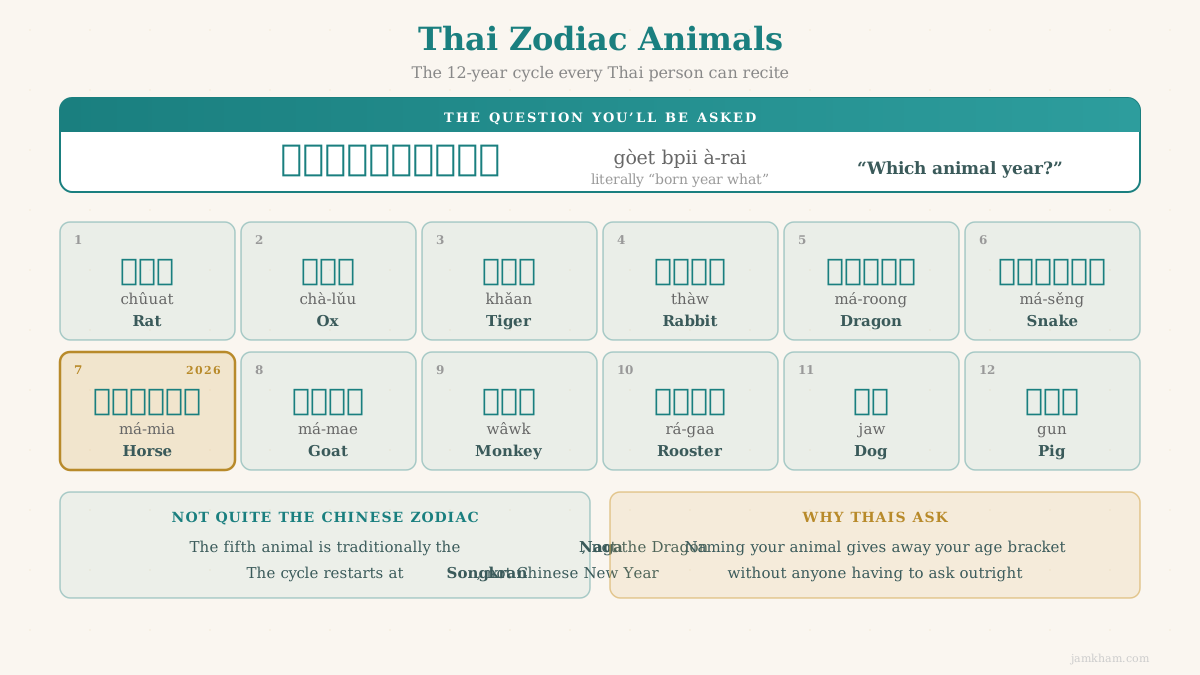
Spend more than a few days making Thai friends and someone will eventually ask: เกิดปีอะไร(gòet bpii à-rai). It sounds like small talk. It is small talk — but it’s asking for your zodiac animal, not your birth year as a number, and if you don’t know what’s being asked, the conversation stalls right where it should be getting warmer.
Thai zodiac animals run on a 12-year cycle almost every Thai person can recite instantly, the same way you might know your Western star sign. Learn the system once and you’ll never be caught blank-faced by the question again — and you’ll have an icebreaker of your own to offer back.
What Is ปีนักษัตร? Thailand’s 12-Year Animal Cycle
bpii nák-sàtปีนักษัตรzodiac year literally means “constellation year,” and it works the way you’d expect if you’ve heard of the Chinese zodiac: twelve years, twelve animals, repeating in a fixed order forever. Everyone born in the same year shares the same animal, and most Thai people can tell you their zodiac animal as automatically as their birthday.
Where it gets interesting for learners is the names. Unlike the Chinese zodiac’s animal names, which are just the regular Mandarin words for rat, ox, tiger, and so on, the Thai zodiac uses a set of traditional astrological names that are mostly different from the everyday animal vocabulary you’d learn in a basic vocab list. มะเมีย(má-mia) doesn’t look or sound like ม้า(máa), even though they mean the same animal. That’s the whole system in one example: a special vocabulary layered on top of words you may already know.
The 12 Thai Zodiac Animals
Here’s the full cycle, in order, with both the traditional zodiac name and the everyday animal word Thais also recognize.
The 12 Thai zodiac animals
| Order | Zodiac Name | Romanization | Animal | Everyday Word |
|---|---|---|---|---|
| 1 | ชวด | chûuat | Rat | หนู (nǔu) |
| 2 | ฉลู | chà-lǔu | Ox | วัว (wua) |
| 3 | ขาล | khǎan | Tiger | เสือ (sěua) |
| 4 | เถาะ | thàw | Rabbit | กระต่าย (grà-dtàai) |
| 5 | มะโรง | má-roong | Dragon (Naga) | มังกร (mang-gawn) |
| 6 | มะเส็ง | má-sěng | Snake | งู (nguu) |
| 7 | มะเมีย | má-mia | Horse | ม้า (máa) |
| 8 | มะแม | má-mae | Goat | แพะ (pháe) |
| 9 | วอก | wâwk | Monkey | ลิง (ling) |
| 10 | ระกา | rá-gaa | Rooster | ไก่ (gài) |
| 11 | จอ | jaw | Dog | หมา (mǎa) |
| 12 | กุน | gun | Pig | หมู (mǔu) |
You don’t need to memorize both columns. The zodiac names (ชวด, ฉลู, ขาล…) are what you’ll actually hear when someone tells you their birth year animal — that’s the register the question and answer live in. The everyday words (หนู, วัว, เสือ…) are worth knowing too, because they’re what most conversations about the system itself use, and because you’ll already recognize several of them from basic vocabulary.
How to Ask (and Answer) the Zodiac Question
The core phrase is short and comes up constantly once you know to listen for it:
gòet bpii à-raiเกิดปีอะไรWhat year (animal) were you born?Literally: “born year what.” It’s casual and direct — you’ll hear it from new acquaintances, taxi drivers making conversation, and coworkers during a lull. A slightly softer version some people use is ปีนี้ปีอะไร(bpii-níi bpii à-rai), which can mean either “what year is it right now” or “what’s your zodiac animal,” depending on context.
To answer, you just name your animal with ปี(bpii) in front of it: ผมเกิดปีมะเมีย(phǒm gòet bpii má-mia). That’s the whole pattern — เกิดปี(gòet bpii) plus your zodiac name.
If you don’t already know your zodiac animal, here’s the shortcut: 2026 is ปีมะเมีย(bpii má-mia), and the cycle repeats every 12 years — so 2014 and 2038 are also Horse years, 2013 and 2025 are Snake years, and so on. Count backward or forward by 12 from your birth year and you’ll land on it.
Thai Zodiac vs. Chinese Zodiac: What’s Actually Different
The two systems share the same twelve animals in the same order, which makes it tempting to treat them as identical. They’re close, but not quite the same system, and the differences are worth knowing if you want to sound like you actually understand it rather than just memorized a list.
The fifth animal is the Naga, not the Dragon — traditionally. Where the Chinese zodiac has the Dragon, older Thai tradition places the นาค(nâak) in that slot — the serpent deity of Thai and Lao mythology, not a Western-style dragon. Most Thai people today say ปีมะโรง(bpii má-roong) and mean it more or less the same way a Chinese Dragon year is meant, but the mythological root is a distinct, homegrown figure rather than an import.
The cycle traditionally restarts at Songkran, not Chinese New Year. In Thai tradition, the new zodiac cycle begins on 13 April, the start of Songkran, rather than the Lunar New Year most East Asian zodiac systems use. Some Thai-Chinese communities follow the Chinese New Year date instead, so you’ll encounter both conventions depending on who you’re talking to — but the Songkran start date is the distinctly Thai version.
In parts of northern Thailand, the Pig can become an Elephant. It’s a regional variant rather than the mainstream version, but if someone from Chiang Mai or further north tells you their zodiac animal is an elephant rather than a pig, that’s why — a local tradition, not a mistake.
A Small Talk Topic With Real Staying Power
What makes this question worth learning is how often it comes back around. Thai people will often ask each other’s zodiac animal well after they’ve already exchanged names, because it’s a natural way to place someone’s age bracket and, informally, swap a little light-hearted personality talk (zodiac animals carry loose personality associations in Thai culture, similar to Western star signs, though nobody takes it as seriously as a horoscope). It’s also a recurring topic around big birthdays — turning 12, 24, 36, 48, or 60 means you’ve completed a full cycle and returned to your birth animal, which is traditionally treated as a more significant milestone than an “ordinary” round-number birthday.
Knowing your own animal — and being able to ask for someone else’s — turns a moment that could be a dead end (you not understanding the question) into one more thing you and a Thai friend actually have in common.
Your Zodiac Animal Has Its Own Temple
One tradition that surprises a lot of visitors: each of the 12 zodiac animals is linked to a specific temple, mostly in northern Thailand, believed to hold a relic connected to the Buddha. A Thai person’s birth-year temple is called their วัดประจำปีเกิด(wát bprà-jam bpii gòet), and many Thais try to visit theirs at least once — especially during a 12-year cycle birthday, when the pilgrimage is believed to bring extra merit and good luck.
Birth-year temples by zodiac animal (mostly northern Thailand)
| Zodiac Animal | Temple | Province |
|---|---|---|
| Rat (ชวด) | Wat Phra Borommathat Si Chom Thong | Chiang Mai |
| Ox (ฉลู) | Wat Phra That Lampang Luang | Lampang |
| Tiger (ขาล) | Wat Phra That Cho Hae | Phrae |
| Rabbit (เถาะ) | Wat Phra That Chae Haeng | Nan |
| Dragon (มะโรง) | Wat Phra Singh | Chiang Mai |
| Snake (มะเส็ง) | Wat Analayo Thipphayaram | Phayao |
| Horse (มะเมีย) | Wat Phra Borommathat | Tak |
| Goat (มะแม) | Wat Phra That Doi Suthep | Chiang Mai |
| Monkey (วอก) | Wat Phra That Phanom | Nakhon Phanom |
| Rooster (ระกา) | Wat Phra That Hariphunchai | Lamphun |
| Dog (จอ) | Wat Ketkaram | Chiang Mai |
| Pig (กุน) | Wat Phra That Doi Tung | Chiang Rai |
If you’re visiting northern Thailand and want a talking point with a temple guide or a Thai travel companion, asking whether a temple you’re visiting happens to be someone’s birth-year temple is a good way to find out — and to hear the story behind why it matters to them personally, not just as a tourist attraction.
Frequently Asked Questions
What is ปีนักษัตร (bpii nák-sàt)?
ปีนักษัตร(bpii nák-sàt) is the Thai term for the 12-year zodiac cycle, where every year is associated with one of 12 animals in a fixed, repeating order. It’s the same underlying concept as the Chinese zodiac, using traditional Thai names for each animal rather than the everyday Thai animal words.
How do I ask someone’s zodiac animal in Thai?
The standard phrase is เกิดปีอะไร(gòet bpii à-rai) — literally “born year what.” It’s casual and commonly used with people you’ve just met, since it’s a gentler way to gauge someone’s age than asking directly.
What Thai zodiac year is 2026?
2026 is ปีมะเมีย(bpii má-mia), the Year of the Horse. It’s also a Fire Horse year in the Chinese system — a combination that only recurs once every 60 years, with the previous one falling in 1966.
Is the Thai zodiac the same as the Chinese zodiac?
Mostly, yes — both use the same 12 animals in the same order and repeat on the same 12-year cycle. The two real differences are that Thai tradition places the Naga (a serpent spirit) in the Dragon’s position, and that the Thai cycle traditionally restarts at Songkran (13 April) rather than Chinese New Year.
Do I need to know the traditional Thai zodiac names, or can I just use the everyday animal words?
Either gets you understood, but the traditional names (ชวด, ฉลู, ขาล, and so on) are what you’ll actually hear when a Thai person states their own zodiac animal, since that’s the register the question and answer normally live in. Knowing both — the zodiac name and its everyday animal equivalent — means you won’t be lost either way.
Keep the Small Talk Going
The zodiac question is one of dozens of small, culturally loaded moments that a phrasebook won’t prepare you for — the kind of exchange where knowing the right words, said with the right tones, is the difference between an awkward pause and a real connection.
Jam Kham’s Speak Thai pack builds this kind of practical, conversational Thai around clear audio, so you’re not memorizing a list of animals — you’re ready to use the question the next time someone asks for yours. Speak Thai is coming soon — join the waitlist for founding pricing.
Related reading: 5 Thai Phrases That Make Locals Smile | Days of the Week in Thai: Names & Colors | Thailand Travel Guide