
How to Read a Thai Menu (Even Without Speaking Thai)
The menu in a non-tourist soi shop is in Thai script, no English. With about 30 words and a system, you can order anything on it.
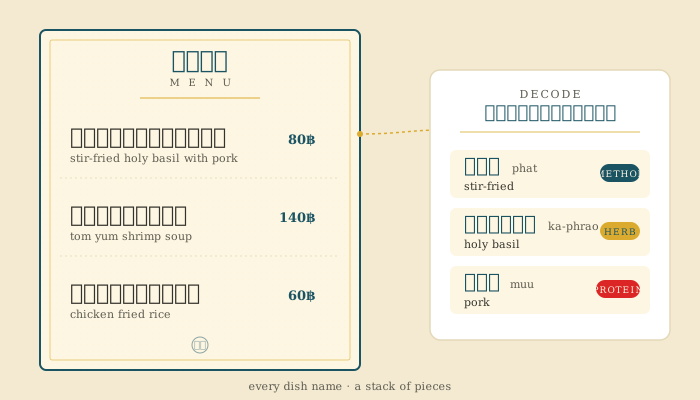
The structure of a Thai menu word
Most Thai dish names aren't single words. They're compounds: a short stack of pieces, each one doing a specific job. Once you spot the pattern, every new dish you see is just slot-filling.
The shape is almost always: [cooking method] + [main ingredient] + [optional modifier]. Take ผัดกะเพราหมู (phat ka-phrao muu). That parses as ผัด (phat, stir-fried) + กะเพรา (ka-phrao, holy basil) + หมู (muu, pork). Stir-fried holy basil with pork. Swap the protein and you get ผัดกะเพราไก่ — same dish, chicken instead. Swap the cooking method and you get something else entirely.
That's why "I can't read the menu" is usually a smaller problem than it looks. You don't need to memorise hundreds of dish names. You need maybe thirty words — six cooking methods, five proteins, a dozen ingredients, a handful of modifiers — and the structure does the assembly for you.
The 5 meat and protein words
Five words cover almost every animal protein on a Thai menu:
- หมู (muu) — pork. The most common by a distance.
- ไก่ (kai) — chicken.
- ปลา (plaa) — fish.
- กุ้ง (kung) — shrimp or prawn.
- เนื้อ (neuua) — beef. (Strictly "meat", but on a menu it means beef unless paired with another animal.)
Two more worth knowing: เจ (jee) marks a strict vegetarian / vegan dish — no meat, no fish sauce, no eggs. เต้าหู้ (taohuu) is tofu, and you'll see it as a substitute protein on almost any stir-fry.
The 6 cooking methods you'll see everywhere
Six words cover most of what comes out of a Thai kitchen. Recognise these and you can predict what the dish will look like before it lands on the table.
- ผัด (phat) — stir-fried in a wok. The default for ผัดไทย (phat thai) and ผัดซีอิ๊ว (phat sii-iu, soy-sauce noodles).
- ทอด (thot) — deep-fried. ไก่ทอด (kai thot) is fried chicken; ปลาทอด is whole fried fish.
- ย่าง (yaang) — grilled over charcoal. หมูย่าง (muu yaang) is grilled pork; ไก่ย่าง is the half-chicken you see hanging in roadside stalls.
- ต้ม (tom) — boiled, almost always a soup. ต้มยำ (tom yam) is the famous sour-spicy soup; ต้มข่า (tom kha) is the coconut-galangal one.
- นึ่ง (neung) — steamed. ปลานึ่ง (plaa neung) is steamed fish, usually with lime and chili.
- ยำ (yam) — a spicy, sour, fresh salad-style preparation. ยำวุ้นเส้น (yam wun-sen) is the glass-noodle one.
Notice how the cooking method usually leads. Once you can read the first word of a dish name, you already know whether it'll arrive hot from the wok, dripping from the fryer, or cold on a plate.
Reading the modifiers — spicy, sweet, sour
Thai food is balanced on four flavour axes, and there's a word for each. They show up on menus as part of the dish name or as a description in brackets.
- เผ็ด (phet) — spicy. Often used as a warning rather than a category — เผ็ดมาก (phet maak) means "very spicy", and the staff aren't joking.
- หวาน (waan) — sweet. ข้าวเหนียวมะม่วง (khaao niao ma-muang, mango sticky rice) is the obvious one.
- เปรี้ยว (priao) — sour. Often paired: เปรี้ยวหวาน (priao waan) is sweet-and-sour, the same compound English uses.
- เค็ม (khem) — salty. Less common as a dish descriptor, but you'll see it called out when something is intentionally on the salty side — ไข่เค็ม (khai khem) is salted egg.
Isan menus lean strongly sour and spicy — that's the regional signature. Northern (Lanna) cooking pulls in another direction, with more herbs and savoury-funky notes (think ข้าวซอย, khao soi, or น้ำพริก, nam phrik) and milder heat. Central Thai food sits closer to the sweet-salty side. Reading the modifiers tells you what region's instincts the kitchen is following — which is often more useful than the dish name itself.
Worked example — reading a real menu line
Three real menu items, broken down piece by piece.
ผัดกะเพราไก่ไข่ดาว (phat ka-phrao kai khai daao). Four chunks. ผัด = stir-fried. กะเพรา = holy basil. ไก่ = chicken. ไข่ดาว = fried egg (literally "star egg" — that's the shape of a sunny-side up). Stir-fried holy basil chicken with a fried egg on top. The Thai office-lunch default.
ก๋วยเตี๋ยวเนื้อ (kuai-tiaao neuua). Two chunks. ก๋วยเตี๋ยว = noodle soup (a category of its own — rice noodles in broth, almost always served with garnishes you add yourself). เนื้อ = beef. Beef noodle soup. If you saw ก๋วยเตี๋ยวหมู next to it on the same menu, you'd already know that one was the pork version.
ส้มตำ (som tam). Two chunks, and an interesting one. ส้ม = sour. ตำ = pounded (in a mortar). Pounded-sour. That's papaya salad — the Isan dish made by pounding green papaya with chili, lime, fish sauce, and palm sugar (the Wikipedia entry on som tam covers the regional variations). The name doesn't say "papaya" anywhere. You learn that one from context, like learning that "fish and chips" doesn't say "fried" or "potatoes".
Three dishes, read from script. About fifteen words between them, all of which show up on the next menu you read.
What to do when you hit a word you don't know
You will. Every menu has at least one. Two cases:
It's a specific dish name — a regional speciality, a signature item, something the kitchen invented. Order it once, ask what's in it, and now you know. You can't predict these from rules; you collect them from real life. After a few months in Thailand most expats have a list of maybe forty of these in their head.
It's a regional name for a familiar ingredient — northern Thai uses different words for some staples than central Thai. Pull out your phone, paste the word into a translator, and you'll usually find it's a thing you already know under a different label.
If you're travelling Thailand and want a fast reference for the road, the Read Thai for Travelers framing gets you the menu vocabulary in the first week. If you live here and want this to compound — so that menus, signs, condo notices and visa forms all become readable — that's the full Read Thai course.
Want this skill for any menu, not just the words above?
The Read Thai course gets you reading any Thai script — menus included — in about 8 weeks. Modules 1–3 are free, no card needed.
Start reading Thai today
Start Read Thai free →First 3 modules free — no card, and they don't expire.
Common questions about reading Thai menus
- Do I need to learn the whole alphabet to read a menu?
- No. Most Thai menus use 15–20 high-frequency consonants and a handful of vowels — once you can read those, the bulk of common dishes become readable. The Read Thai course teaches these consonants first, specifically because they show up most.
- What's the difference between ข้าว and ก๋วยเตี๋ยว?
- ข้าว (khaao) means rice; ก๋วยเตี๋ยว (kuai-tiaao) means noodles. The two letters that distinguish them — ข vs ก — are both in the "first 7 consonants" you learn in Read Thai module 1.
- Why do some menus mark dishes with stars or chili icons?
- Most Thai menus use chili icons or stars to mark spice levels — typically 1 to 3 chilies, escalating. You'll also see the Thai word เผ็ด (phet, "spicy") attached to specific dishes. Reading the word directly is more reliable than trusting the icons, which vary by restaurant.
- How do I tell which dishes are pork vs chicken vs fish?
- หมู (muu) = pork. ไก่ (kai) = chicken. ปลา (plaa) = fish. กุ้ง (kung) = shrimp. เนื้อ (neuua) = beef. These five words appear on almost every Thai menu, paired with the cooking method.
- Do Thai menus have English translations?
- Tourist-area menus often do; local-area menus often don't. Knowing the script means the menu doesn't change depending on where you eat.
Reading the menu is the start. Reading everything else is the course.
Start reading Thai today
Start Read Thai (free) →First 3 modules free — no card, and they don't expire.