
Loy Krathong & Yi Peng: Thai Phrases and Etiquette
Loy Krathong falls on 25 Nov 2026, Yi Peng on 24–25. The Thai vocabulary, phrases, and etiquette you need for Thailand's festival of lights.
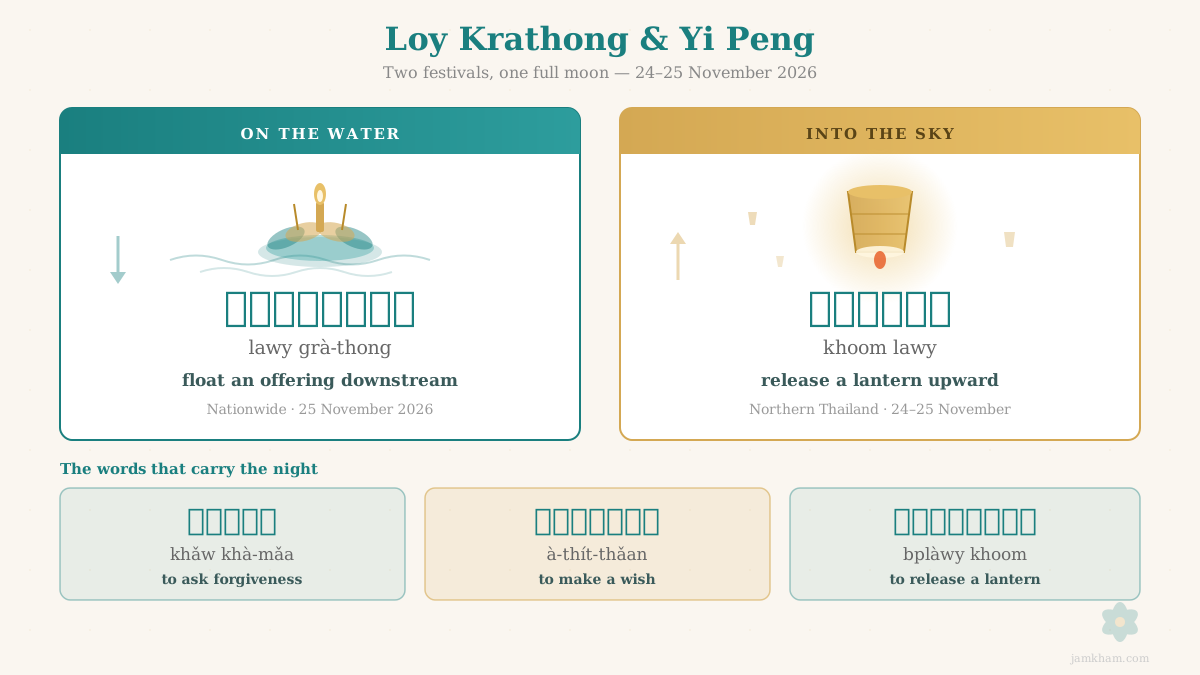
Loy Krathong is the Thailand you’ve seen in photos: thousands of candlelit banana-leaf boats drifting across rivers and moats under a full moon, and — if you’re in Chiang Mai for Yi Peng — a sky full of rising lanterns above the old city. In 2026, Loy Krathong falls on Wednesday, 25 November, with Chiang Mai’s Yi Peng celebrations running 24–25 November.
It’s also the festival where a little Thai goes the longest way. Songkran is a water fight; Loy Krathong is quieter, more personal, and full of small rituals — buying the right krathong, making a wish, apologizing to a river. Knowing what the words mean turns you from someone photographing the festival into someone taking part in it. Here’s the vocabulary, the phrases you’ll actually use, and the etiquette that keeps you on the right side of both tradition and the law.
What Loy Krathong Actually Is
The name tells you the whole ritual. ลอย(lawy) means to float, and a กระทง(grà-thong) is the little decorated float itself — traditionally a slice of banana trunk wrapped in folded banana leaves, holding flowers, three incense sticks, and a candle. On the night of the full moon, you light the candle and incense, make a wish, and set it on the water.
The ritual’s heart is an apology. Thais float krathongs to honor and ask forgiveness from พระแม่คงคา(phrá mâe khong-khaa) — for a year of using and polluting her rivers. That asking-of-forgiveness has its own word:
khǎw khà-mǎaRisingขอขมาto respectfully ask forgivenessMany Thais also treat the krathong as a vessel for letting go: some tuck in a coin as an offering, and the old tradition of adding a hair or nail clipping symbolically floats away the year’s bad luck and grievances. When your krathong drifts off, so does the negativity it carries.
You’ll hear the festival before you understand it — the Loy Krathong song plays everywhere, and its first line doubles as a vocabulary lesson: วันเพ็ญเดือนสิบสอง น้ำนองเต็มตลิ่ง(wan phen deuan sìp-sǎwng, náam nawng dtem dtà-lìng). วันเพ็ญ(wan phen) is the full-moon day, and เดือนสิบสอง(deuan sìp-sǎwng) is why the date moves every year — the twelfth Thai lunar month usually lands in November.
Yi Peng vs. Loy Krathong: Not the Same Festival
The lantern photos that made Chiang Mai famous come from a different festival that happens to share the date. ยี่เป็ง(yîi bpeng) is northern Thailand’s Lanna festival: yîi means “two” and bpeng means “full moon” in the northern dialect, because the twelfth month of the central Thai calendar is the second month of the old Lanna one.
The practical difference:
Loy Krathong vs. Yi Peng
| Loy Krathong | Yi Peng | |
|---|---|---|
| Where | Nationwide | Northern Thailand (Chiang Mai region) |
| Direction | Down — offerings float on water | Up — lanterns rise into the sky |
| The object | กระทง(grà-thong) (banana-leaf float) | โคมลอย(khoom lawy) (sky lantern) |
| Meaning | Apologize to the water goddess, let go of bad luck | Release misfortune; merit-making in the Lanna Buddhist tradition |
| 2026 dates | 25 November | 24–25 November (Chiang Mai) |
In Chiang Mai you get both at once: krathongs on the Ping River and the old city moat, lanterns overhead, temples lit with candles and โคมไฟ(khoom fai) — hanging Lanna-style lanterns — for days on either side. Elsewhere in Thailand, it’s krathongs only; sky lanterns are banned outright in Bangkok and most of the country.
If Chiang Mai’s on your itinerary, the Chiang Mai language survival guide covers the songthaew fares, old-city navigation, and northern politeness particles that’ll carry the rest of your trip.
The Festival Vocabulary
Loy Krathong & Yi Peng essentials
| Thai | Romanization | Meaning |
|---|---|---|
| ลอยกระทง | lawy grà-thong | to float a krathong (the festival itself) |
| กระทง | grà-thong | the floating offering |
| โคมลอย | khoom lawy | sky lantern |
| ปล่อยโคม | bplàwy khoom | to release a lantern |
| ขอขมา | khǎw khà-mǎa | to ask forgiveness |
| อธิษฐาน | à-thít-thǎan | to make a wish/prayer |
| วันเพ็ญ | wan phen | full-moon day |
| พระจันทร์เต็มดวง | phrá jan dtem duang | full moon |
| ธูป | thûup | incense stick |
| เทียน | thian | candle |
| ใบตอง | bai dtawng | banana leaf |
| ดอกบัว | dàwk bua | lotus flower |
Two of these earn special attention. อธิษฐาน(à-thít-thǎan) is the wish-making word — not a birthday-candle wish, but the solemn kind you make with palms together before releasing your krathong. And ปล่อย(bplàwy) — to release — is the verb for lanterns, fish, birds, and metaphorically, everything you’re done carrying.
Phrases You’ll Actually Use That Night
Buying your krathong. Stalls line every waterway from late afternoon. Ask the price with กระทงอันนี้เท่าไหร่ครับ/คะ(grà-thong an níi thâo-rài khráp/khá). Expect 30–100 baht depending on size and materials. If you want the eco-friendly kind, ask for กระทงใบตอง(grà-thong bai dtawng) or a bread one, กระทงขนมปัง(grà-thong khà-nǒm bpang) — the fish finish it by morning.
Finding the water. ลอยกระทงที่ไหนดีครับ/คะ(lawy grà-thong thîi nǎi dii khráp/khá) gets you a local’s answer, which beats the crowded spot on your map. For lanterns in Chiang Mai, the crucial question is ปล่อยโคมได้ที่ไหนครับ/คะ(bplàwy khoom dâai thîi nǎi khráp/khá) — note the ได้(dâai), “where is it allowed,” because the answer is legally specific (more below).
Asking when things happen. เริ่มกี่โมงครับ/คะ(rôem gìi moong khráp/khá) works for parades, lantern releases, and fireworks alike.
Joining in. When someone helps you light your candle in the wind (someone will), ขอบคุณครับ/ค่ะ(khàwp-khun khráp/khâ) plus a smile does it. And the all-purpose compliment for the night: สวยมาก(sǔay mâak) — for a krathong, a lantern-filled sky, or the full moon itself.
Etiquette: The Do’s, the Don’ts, and the Law
On the water
Dress modestly — much of the floating happens at temple ghats and riverside วัด(wát) grounds, so shoulders and knees covered is the safe call. Take off your shoes where others have. Don’t step over krathongs waiting at the water’s edge; walk around them. And let others’ krathongs drift — retrieving one (even “to help”) disturbs someone’s ritual apology.
Choose biodegradable. Many municipalities now ban styrofoam (โฟม(foom)) krathongs entirely, and cleanup crews pull tens of thousands of krathongs from Bangkok’s waterways alone the morning after. Banana leaf and bread are the standard; some cities also accept shared or digital krathongs if you’d rather not add to the count.
In the sky — read this before buying a lantern
Sky lanterns are the festival’s most photographed moment and its most regulated one. Chiang Mai sits under a busy flight path, and a rising paper lantern is a genuine aviation hazard — so authorities restrict releases to approved zones outside the airport’s safety radius, within set evening hours on the festival dates only. Several districts are designated no-release zones, and violations carry fines up to six figures in baht and potential prison time. The airport reschedules or cancels dozens of flights around the festival anyway, purely as a precaution — worth checking if you’re flying in or out of Chiang Mai on 24–26 November.
What that means for you, practically: don’t buy a lantern from a street vendor and light it wherever looks pretty. Ask ปล่อยโคมได้ไหม(bplàwy khoom dâai mǎi) — and go where the answer is yes: an organized event, a temple release, or one of the sanctioned mass-release grounds outside the city. Those ticketed lantern events aren’t a tourist trap; they exist because the sanctioned locations are where releases are legal.
How to Float Your Krathong (The Full Ritual)
Here’s the sequence you’ll see Thais follow, worth doing properly your first time:
- Buy your krathong in the late afternoon — กระทงใบตอง(grà-thong bai dtawng) if you want tradition, bread if you want the fish fed.
- Optionally add a small coin as an offering — and if you’re following the old custom, a strand of hair or a nail clipping, carrying your year’s misfortunes.
- At the water, light the candle and the three incense sticks (locals will lend you a lighter; the wind guarantees it).
- Hold the krathong in both hands, raise it slightly, and make your อธิษฐาน(à-thít-thǎan) — the wish, plus the ขอขมา(khǎw khà-mǎa) apology to the water.
- Lower it gently onto the water and give it a soft push. Tradition says if the candle stays lit until the krathong drifts out of sight, the year ahead is a good one.
Couples float one krathong together — the festival doubles as Thailand’s most romantic night, and floating jointly is a small statement about the relationship. Take from that what you will.
Where to Experience It in 2026
Chiang Mai is the headline act: krathongs on the Ping River and the moat, the Yi Peng lantern releases, illuminated temples, and parades over 24–25 November. Book accommodation months ahead — this and Songkran are the city’s two peak weeks. Sukhothai, where the festival’s origin legend is set, stages a spectacular light-and-sound show in the historical park. Bangkok floats krathongs along the Chao Phraya and in city parks (no lanterns), and every provincial town has its own waterside fair — often more relaxed and more fun to be a foreigner at than the big three.
Whichever you choose, the festival rewards the traveler who can handle a night market, a temple visit, and a price negotiation in Thai — the Thailand travel guide hub covers all three, and the festivals guide puts Loy Krathong alongside Songkran and the rest of the calendar so you can plan around them.
Frequently Asked Questions
When is Loy Krathong in 2026?
Loy Krathong falls on Wednesday, 25 November 2026 — the full moon of the twelfth Thai lunar month. Chiang Mai’s Yi Peng celebrations run 24–25 November 2026, with festival events in the city stretching a day or two on either side. The date shifts every year with the lunar calendar, usually landing in November.
What’s the difference between Loy Krathong and Yi Peng?
Loy Krathong is celebrated nationwide by floating decorated offerings (krathongs) on water, honoring and asking forgiveness of the water goddess. Yi Peng is a northern Lanna festival celebrated by releasing sky lanterns (khoom lawy) for merit and to release misfortune. In Chiang Mai the two coincide, which is why the city gets both floating lights and a lantern-filled sky.
Can you release sky lanterns anywhere in Chiang Mai?
No. Releases are legal only in approved zones outside the airport’s aviation safety radius, during set hours on the festival dates, and several districts ban them entirely. Penalties for violations reach into heavy fines and potential prison time. Release lanterns only at sanctioned events or locations — ask “bplàwy khoom dâai mǎi?” (is it allowed to release lanterns here?) before lighting anything.
What do you say when floating a krathong?
There’s no fixed formula — Thais make a quiet personal wish (à-thít-thǎan) and an apology to the water goddess (khǎw khà-mǎa phrá mâe khong-khaa) with palms together before releasing the krathong. Any sincere words work. The useful spoken phrases are practical ones: asking prices, asking where to float, and sǔay mâak (very beautiful) for everything you’ll see.
What should a krathong be made of?
Banana trunk and banana leaves (bai dtawng) are traditional and fully biodegradable; bread krathongs dissolve into fish food by morning. Avoid styrofoam — many cities ban it, and thousands of foam krathongs have to be dredged out of waterways the next day. When buying, ask for grà-thong bai dtawng or grà-thong khà-nǒm bpang.
Learn the Phrases Before the Full Moon
Loy Krathong rewards preparation more than most festivals: the night is short, the crowds are thick, and the difference between watching and participating is a handful of phrases — buying, asking, wishing, thanking — said with the right tones at the right moment.
That’s a solvable problem in the four months before November. Speak Thai is coming soon — join the waitlist for founding pricing and trip-paced practice, so your festival phrases, tones and all, are solid by the time the twelfth full moon rises.
Related reading: Chiang Mai Language Survival Guide | Songkran Thailand Guide | Thai Festivals