
Muay Thai Vocabulary: Thai Phrases for the Gym
Muay Thai vocabulary for the gym: trainer commands, strikes, wai kru, and etiquette phrases — so you're not the silent farang at the bag.
Walk into almost any Muay Thai gym in Thailand and the language on the pads is Thai. Even at the most tourist-friendly camps in Bangkok, Phuket, or Chiang Mai, trainers count in Thai, call strikes in Thai, and correct you in Thai — English is the fallback, not the default. That’s a problem if gym tourism is why you’re spending two, six, or twelve weeks here. Guidebooks cover markets and taxis, not the ring, so this is the Muay Thai vocabulary and the Muay Thai phrases they leave out.
That gap matters more in 2026 than it used to. Thailand’s government now offers a special 90-day Muay Thai visa — renewable up to three times, for up to a year total — specifically for foreigners training at certified camps, part of a “soft power” push to bring long-term students rather than one-off tourists. More people are training longer, which means more people standing at the bag not understanding a word their trainer just shouted.
This guide covers the vocabulary that actually gets used in a Thai gym: trainer commands, the names of strikes, pad-holding phrases, counting rounds, and the etiquette that determines whether your trainer enjoys coaching you or tolerates you.
Why Gym Thai Is Its Own Category
Most Thai phrasebooks for travelers assume you’re ordering food or hailing a taxi. Muay Thai gyms run on a completely different, much smaller vocabulary — but it’s used constantly and at speed, often shouted over the sound of pads. A trainer holding pads for you might say twenty words in two minutes, and if none of them register, you miss the correction that would have fixed your form.
The upside: gym Thai is a closed set. Learn roughly 30-40 words and you’ll understand the overwhelming majority of what gets said to you in a training session, at any gym in the country.
The Four Strikes: What Your Trainer Is Calling Out
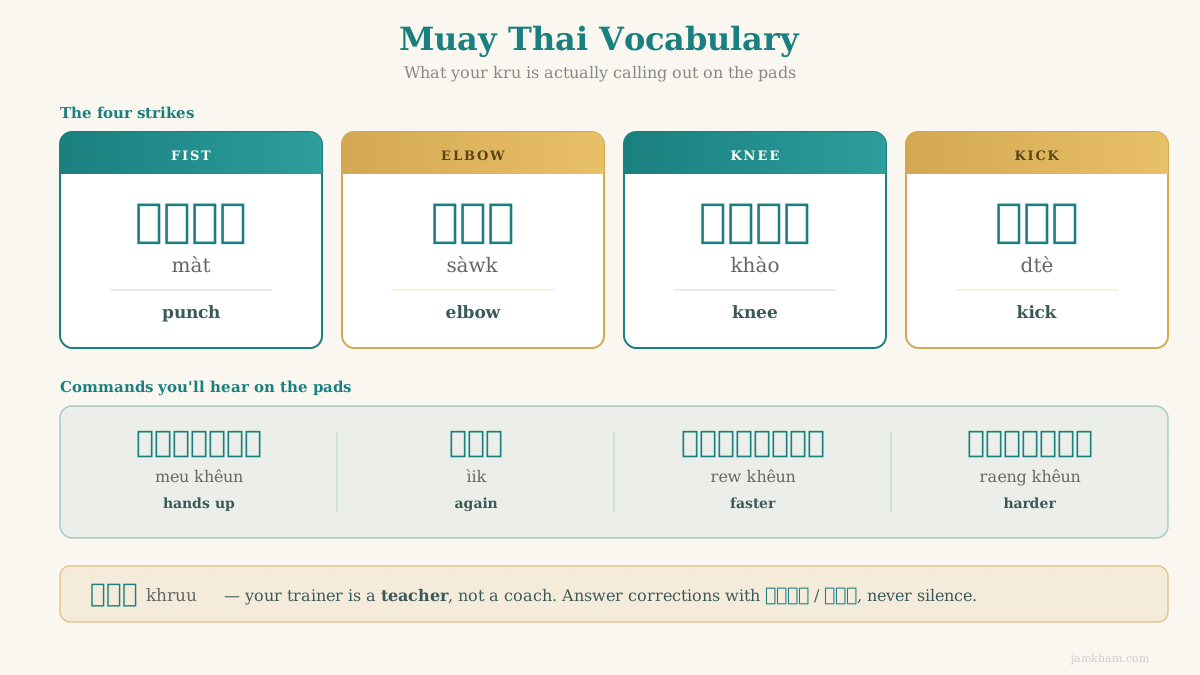
Muay Thai is sometimes called “the art of eight limbs” — two fists, two elbows, two knees, two shins. Each has its own Thai name, and trainers use these words constantly, both as commands (“throw a knee”) and as feedback (“good elbow”).
The core strikes
| Thai | Romanization | Meaning |
|---|---|---|
| หมัด | màt | punch / fist |
| ศอก | sàwk | elbow |
| เข่า | khào | knee |
| เตะ | dtè | kick |
| ปัด | bpàt | to block / parry |
| จับ | jàp | to clinch / grab |
You’ll hear this constantly, especially at gyms known for clinch work. A fighter who specializes in knees and clinching is called a มวยเข่า(muay khào) — one of the recognized fighting styles in Muay Thai, alongside มวยเตะ(muay dtè) and มวยมัด(muay màt).
A trainer calling a combination might say เตะ สอง เข่า(dtè sǎwng khào) — numbers get slotted directly into strike combinations, which is one more reason it’s worth knowing your Thai numbers before you land at the gym.
Trainer Commands You’ll Hear on the Pads
This is the vocabulary that actually runs a pad-holding session. None of it is complicated, but none of it is intuitive from English either.
- มือขึ้น(meu khêun) — the most common correction there is; said the instant your guard drops
- อีก(ìik) — said alone, it means “do that again”; said as อีกครั้ง(ìik khráng), it’s slightly more formal
- เร็วขึ้น(rew khêun) — literally “speed up”
- แรงขึ้น(raeng khêun) — for power, not speed; trainers often say both together
- เปลี่ยน(bplìian) — change sides, change combination, change drill
- พัก(phák) — the word you’ll be listening hardest for
- สู้(sûu) — shouted as encouragement mid-round, not a literal instruction to fight harder than intended
- ดี(dii) — the highest praise you’ll usually get, and worth genuinely valuing when you hear it
Talking to Your Trainer: Kru, Not Just “Coach”
The word for teacher, khruuครูteacher, gets used for Muay Thai trainers the same way it’s used for a schoolteacher — and that’s not a small detail. In Thai culture, the teacher-student relationship carries a weight of respect and obligation that “coach” doesn’t quite capture in English. Calling your trainer ครู(khruu) or the more casual โค้ช(khóot) both work, but “kru” is the word that acknowledges what the relationship actually is in a traditional gym.
To please a Thai trainer, use the title. A student who says ขอบคุณครับ ครู(khàwp khun khráp, khruu) at the end of a session stands out from the students who just grab their bag and leave.
What Is Wai Kru? The Pre-Fight Ritual Explained
wâi khruuไหว้ครูpaying respect to the teacherWai kru is the ritual you’ll see every fighter perform before a Muay Thai match — circling the ring, kneeling, and bowing toward each corner before the fight starts. The name is literally two words stacked together: ไหว้(wâi) plus ครู(khruu), so wai kru means “paying respect to the teacher.” It’s usually followed immediately by รำมวย(ram muay) — together the full ritual is sometimes called ไหว้ครูรำมวย(wâi khruu ram muay), though most people, Thai and foreign alike, just say “wai kru” for short.
It’s not a superstition or a warm-up routine. A fighter performing wai kru is paying respect to their teachers, their gym, and their training lineage before stepping into a fight — an extension of the exact same respect vocabulary you use with your own trainer every single session. Watching it as a spectator, or performing a simplified version of it yourself if your gym includes one before sparring, makes a lot more sense once you know it’s not decoration; it’s the gym’s whole teacher-student relationship, condensed into a few minutes of ritual.
Counting Rounds and Reps
Trainers count in Thai as a matter of course, whether you understand or not. Rounds, reps, and rest periods all get called out in Thai numbers, so recognizing them by ear matters more here than almost anywhere else in daily Thai life.
yókยกroundA five-round pad session is ห้ายก(hâa yók). The bell or buzzer that starts and ends a round is ระฆัง(rá-khang) — in an actual fight, listen for it; in most gyms, a trainer’s whistle or shout does the same job.
Gym equipment and setup
| Thai | Romanization | Meaning |
|---|---|---|
| เป้า | bpâo | Thai pads / focus pads |
| นวม | nuam | gloves |
| กระสอบทราย | grà-sàwp saai | heavy bag |
| มงคล | mong-khon | sacred headband (fighters only) |
| ค่ายมวย | khâai muay | boxing camp / gym |
| นักมวย | nák muay | fighter / boxer |
Muay Thai Etiquette: Ring and Gym Rules That Actually Matter
Technique earns respect slowly. Etiquette earns it immediately, and getting it wrong is one of the fastest ways to look like you don’t belong — even if your kicks are solid.
- Never step over someone’s legs or body, especially inside the ring. Walk around. The head is considered the highest, most respected part of the body in Thai culture and the feet the lowest, so stepping over someone reverses that order symbolically.
- Don’t step on the ropes going in or out of the ring — step over them, or duck through them, but treat the ring itself with the same respect you’d show a temple. Many Thai fighters and trainers consider the ring a space with its own protective spirits.
- The mongkol (มงคล) is worn by fighters only, and only the trainer removes it — usually right before the fight starts, in a small ceremonial gesture. Don’t touch it casually.
- Wai your trainer at the start and end of a session, the same greeting gesture you’d use with any Thai person you respect — small, but noticed.
Where to Train: Gym Tourism Hotspots
If you’re planning a training trip specifically, Chiang Mai remains one of the country’s biggest destinations for it — camps outside the old city draw long-stay foreign students year-round, alongside its cooking classes, temple visits, and digital nomad scene. Bangkok and Phuket both have long-established fight gyms too, ranging from serious camps that produce professional fighters to relaxed, class-based studios built for visitors.
Wherever you land, the vocabulary in this guide travels with you — trainers everywhere use the same core commands, strike names, and etiquette, regardless of which coast or city you’re training on.
Frequently Asked Questions
What Thai words do Muay Thai trainers use most?
The most common commands are มือขึ้น(meu khêun), อีก(ìik), เร็วขึ้น(rew khêun), and แรงขึ้น(raeng khêun), along with the names of the four strikes: หมัด (punch), ศอก (elbow), เข่า (knee), and เตะ (kick).
What does “kru” mean in Muay Thai?
ครู(khruu) is the Thai word for “teacher,” used for Muay Thai trainers the same way it’s used for schoolteachers. It reflects a relationship of respect and obligation, not just a job title.
What is wai kru in Muay Thai?
ไหว้ครู(wâi khruu) is the ritual fighters perform before a Muay Thai match, usually followed by the ceremonial dance รำมวย(ram muay). The name literally means “paying respect to the teacher” — it’s a fighter honoring their trainers, gym, and training lineage before stepping into the ring, not a superstition or warm-up.
What is Muay Thai gym etiquette?
Key rules include never stepping over someone’s legs or body (especially in the ring), not stepping on the ropes going in or out, letting only your trainer handle the มงคล(mong-khon), and wai-ing your trainer at the start and end of a session. These customs matter to Thai staff even at relaxed, tourist-oriented gyms.
Is there a special visa for training Muay Thai in Thailand?
Yes. Thailand’s government offers a 90-day Muay Thai visa, renewable up to three times for a maximum stay of about a year, intended for foreigners training at certified Muay Thai camps as part of a tourism and “soft power” initiative.
Do I need to learn Thai to train Muay Thai in Thailand?
No — most gyms that cater to foreigners have English-speaking trainers or staff who can bridge the gap. But even a basic gym vocabulary changes the relationship: it shows respect, helps you catch corrections in real time, and tends to get you coached more attentively rather than just tolerated.
Train Like You Understand What’s Being Said
Gym Thai is a small, learnable vocabulary that pays off every session — in the corrections you catch mid-round, and in how differently a trainer coaches someone who has clearly put the work in.
Jam Kham’s Speak Thai pack builds practical, situational vocabulary like this around clear Thai audio, so commands like “เร็วขึ้น” and “เข่า” register instantly, tones included. Speak Thai is coming soon — join the waitlist for founding pricing, and walk into your next session understanding what your kru is telling you.
Related reading: Chiang Mai Language Survival Guide | 30 Thai Phrases That Cover 90% of Your Trip